- 北京圆明园文创店设计 | 传统与现代结合的商业空间设计
-
2025-11-10
© 金伟琦
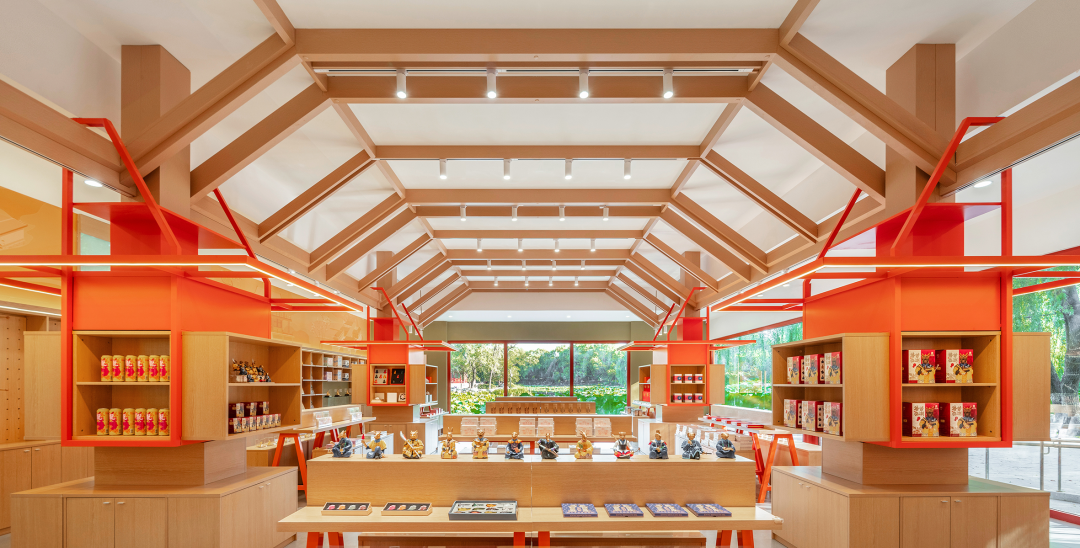
圆明园文创展示中心坐落于圆明园绮春园天心水面原址上,位于鉴碧亭以北,残桥西北方向,在一座现代仿古建筑中。中央美术学院团队承担本次对空间改造的设计工作。改造后的空间用于圆明园主题文创产品售卖和设计成果展示,为企业、高校提供一个展示、交流的平台。
The Yuanmingyuan Cultural and Creative Exhibition Center is located on the original site of the Tianxin Water Surface in the Qichun Garden of Yuanmingyuan, north of Jianbi Pavilion and northwest of the Remnants Bridge, in a modern antique building. The Central Academy of Fine Arts team is responsible for the design work of the space renovation. The renovated space is used for the sale of cultural and creative products with the theme of Yuanmingyuan and the display of design results, providing a platform for enterprises and universities to showcase and exchange ideas.
北京圆明园文创展示中心
Beijing Yuanmingyuan Cultural and Creative Exhibition Center
-- -
今天,大众对文化创意产品的消费已经为一种具有引领性的文化现象,一种新的生活方式。他们渴望在文化创意产品的消费中寻找对中国文化的认同感和自豪感。圆明园文创产品的研发理念正是基于对传统文化的创造性转化与创新性发展,致力于挖掘展示圆明园独特文化魅力。本次空间设计基于这一理念,从场所的在地性中构建文化形象,在传统与当代性之间探寻平衡,为游客提供一个印象深刻的购物体验。
Today, the consumption of cultural and creative products by the public has become a leading cultural phenomenon and a new way of life. They long to seek a sense of identity and pride in Chinese culture through the consumption of cultural and creative products. The research and development concept of cultural and creative products in Yuanmingyuan is based on the creative transformation and innovative development of traditional culture, committed to exploring and showcasing the unique cultural charm of Yuanmingyuan. This spatial design is based on this concept, constructing cultural images from the locality of the place, exploring a balance between tradition and modernity, and providing visitors with an impressive shopping experience.
© 金伟琦
© 金伟琦
© 金伟琦
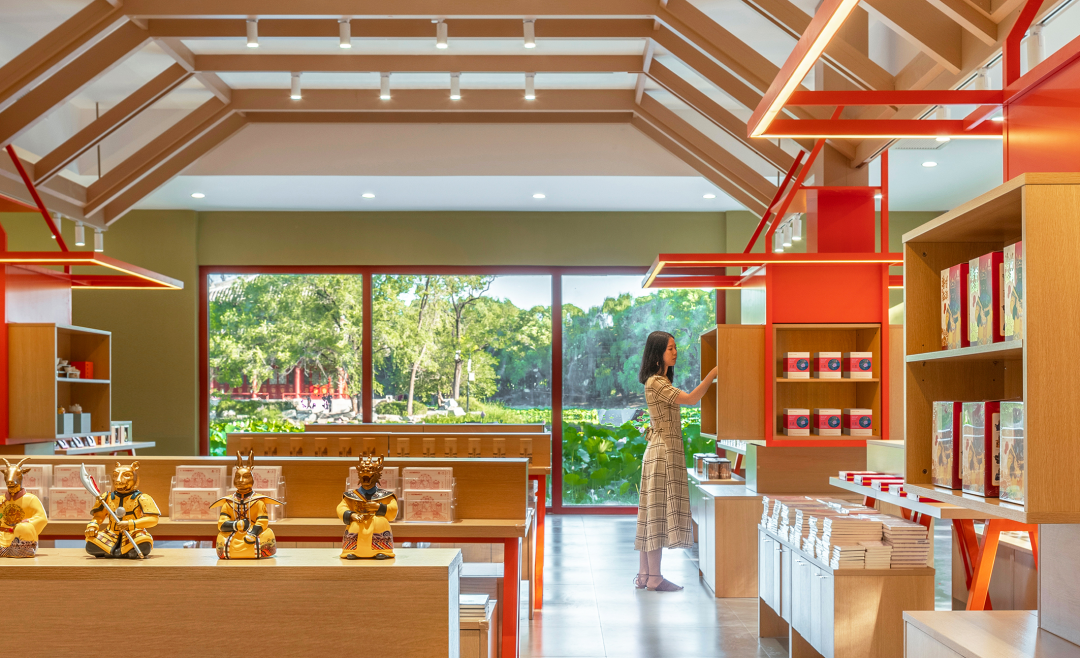
在清代,就有皇帝在紫禁城及圆明园的皇家苑囿里摆摊搭棚买卖东西的传统。当时,它们被称之为“宫市”。新的文创售卖空间同样以“市集”为概念,通过对传统商业文化的探索,实现当代消费空间与皇家园林文化的对话。
In the Qing Dynasty, there was a tradition of emperors setting up stalls and sheds in the imperial gardens of the Forbidden City and Yuanmingyuan to buy and sell things. At that time, they were called 'palace markets'. The new cultural and creative sales space is also based on the concept of "market", exploring traditional commercial culture to achieve a dialogue between contemporary consumer space and royal garden culture.
© 金伟琦
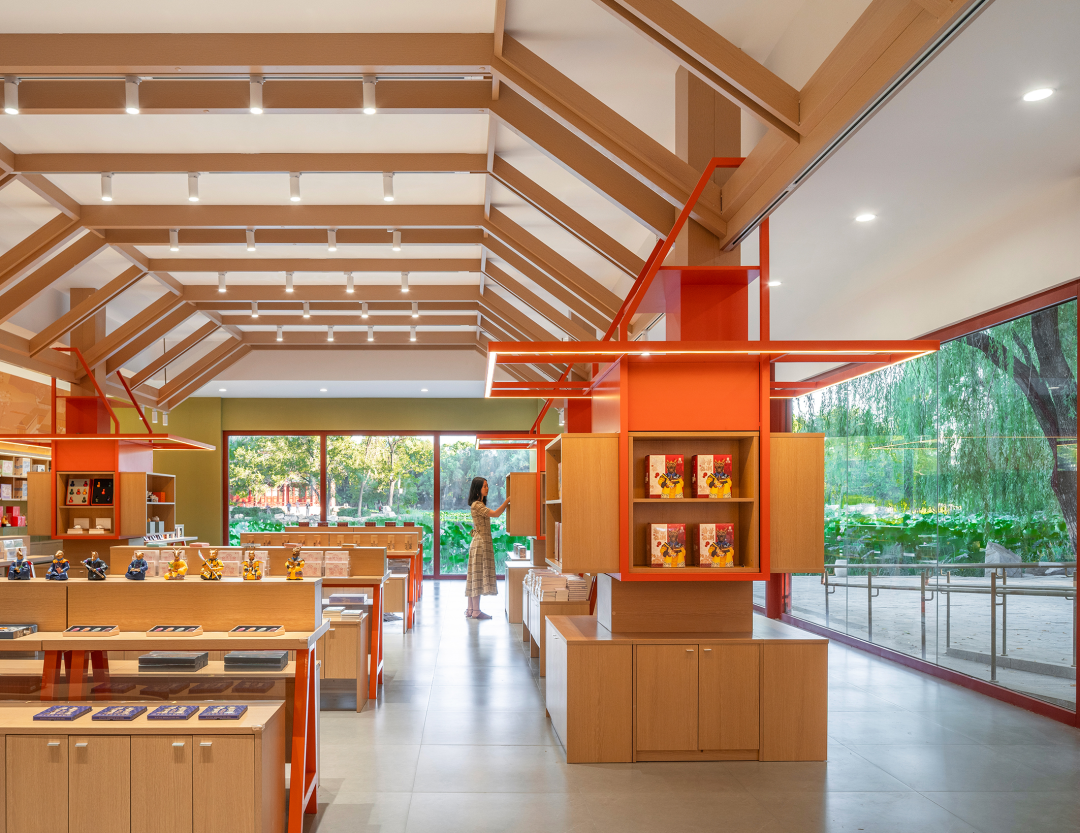
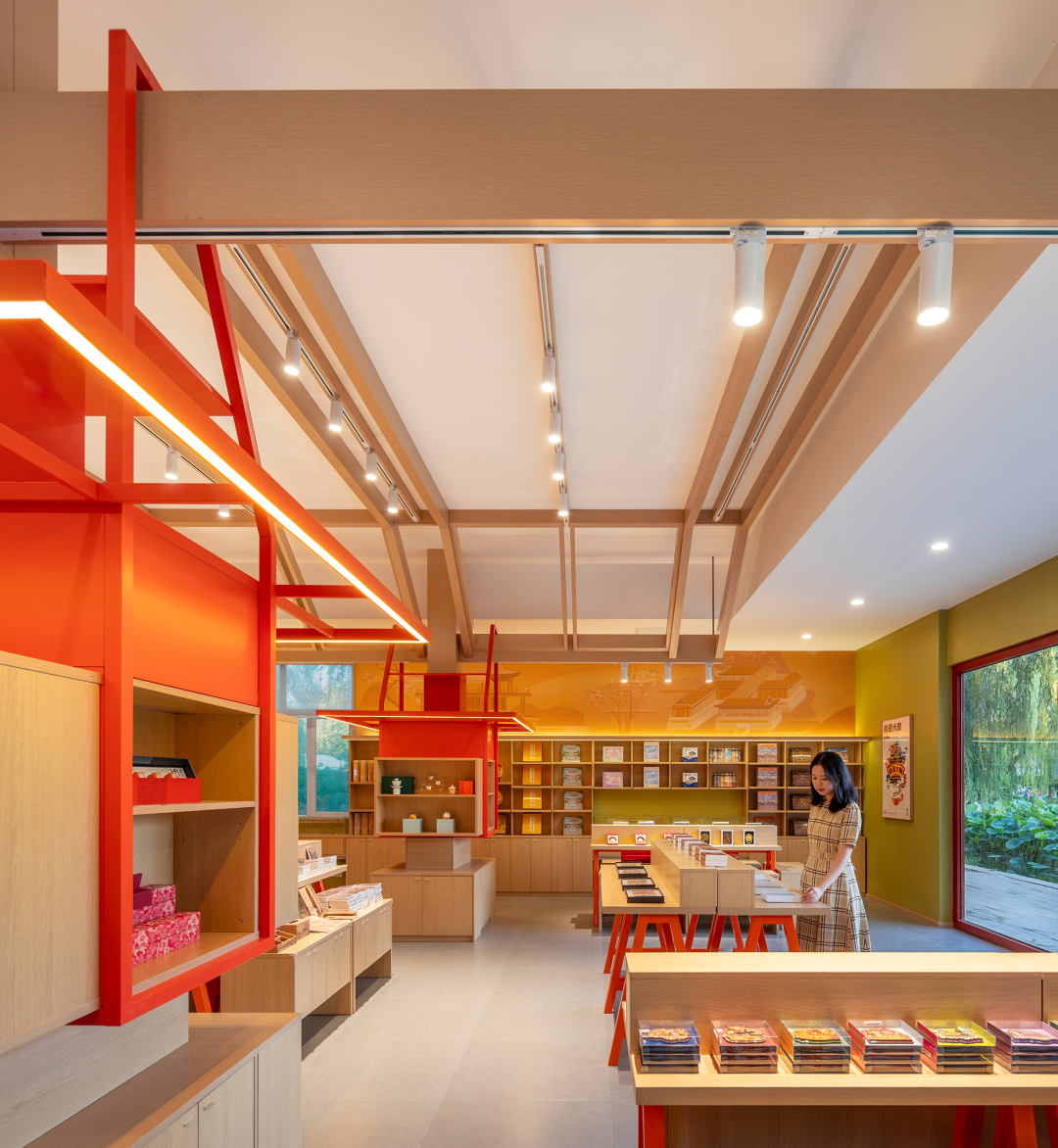
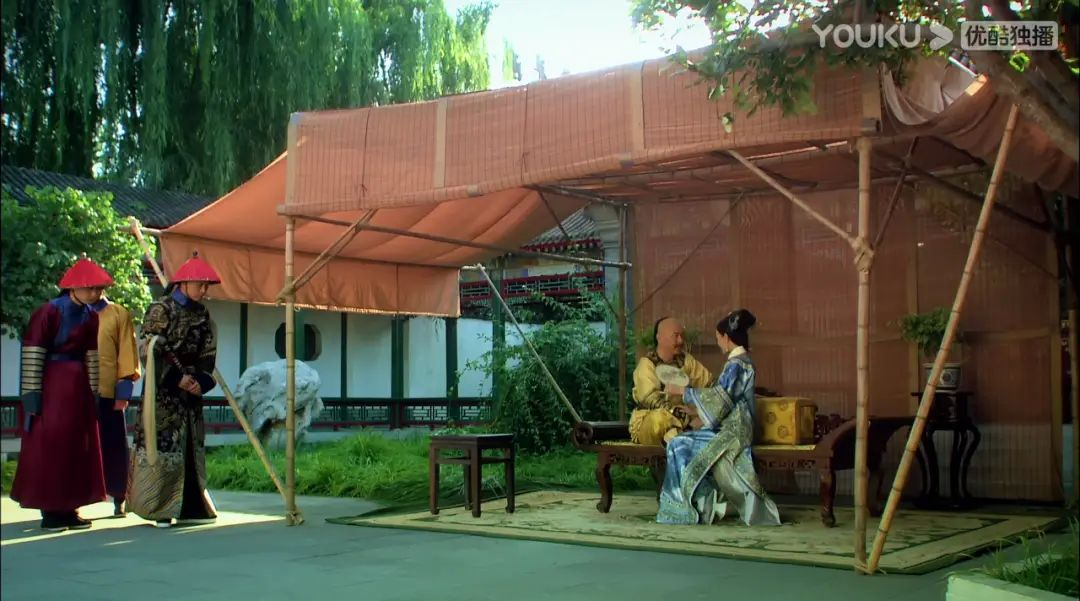
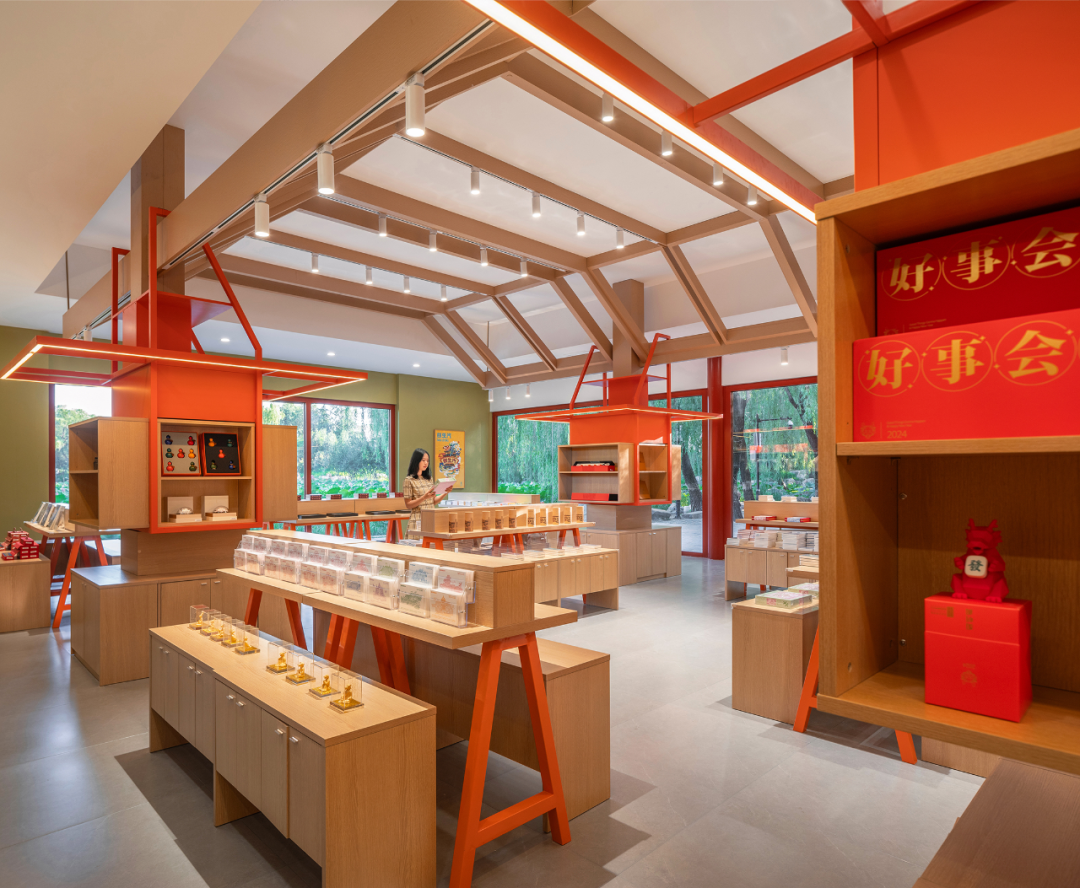
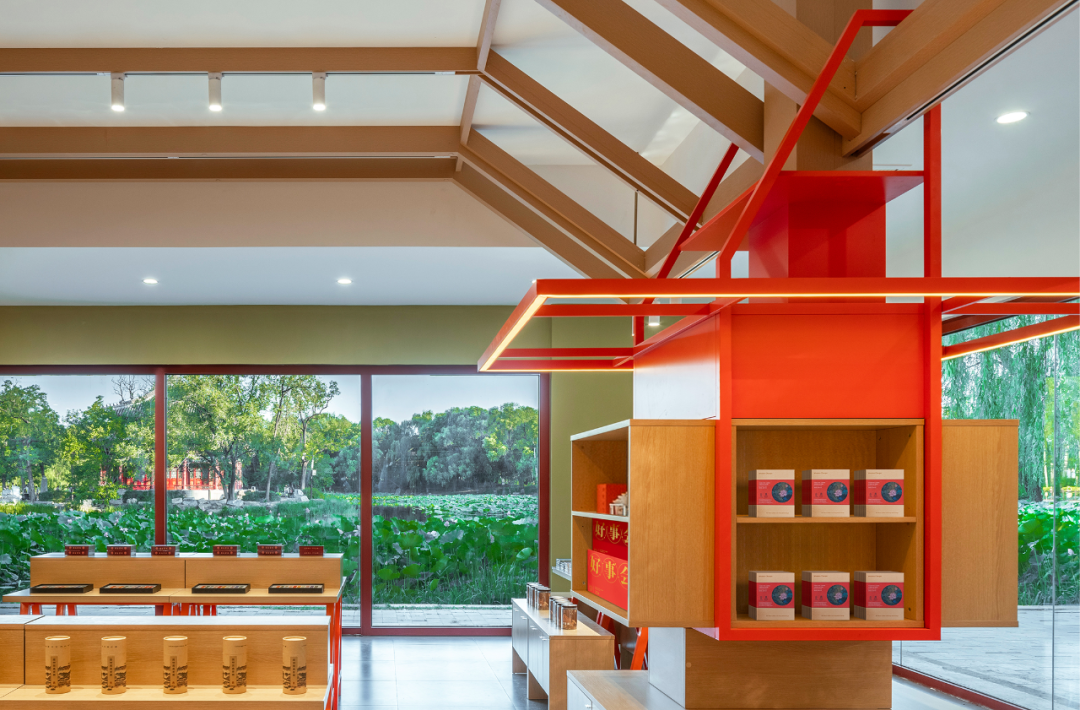
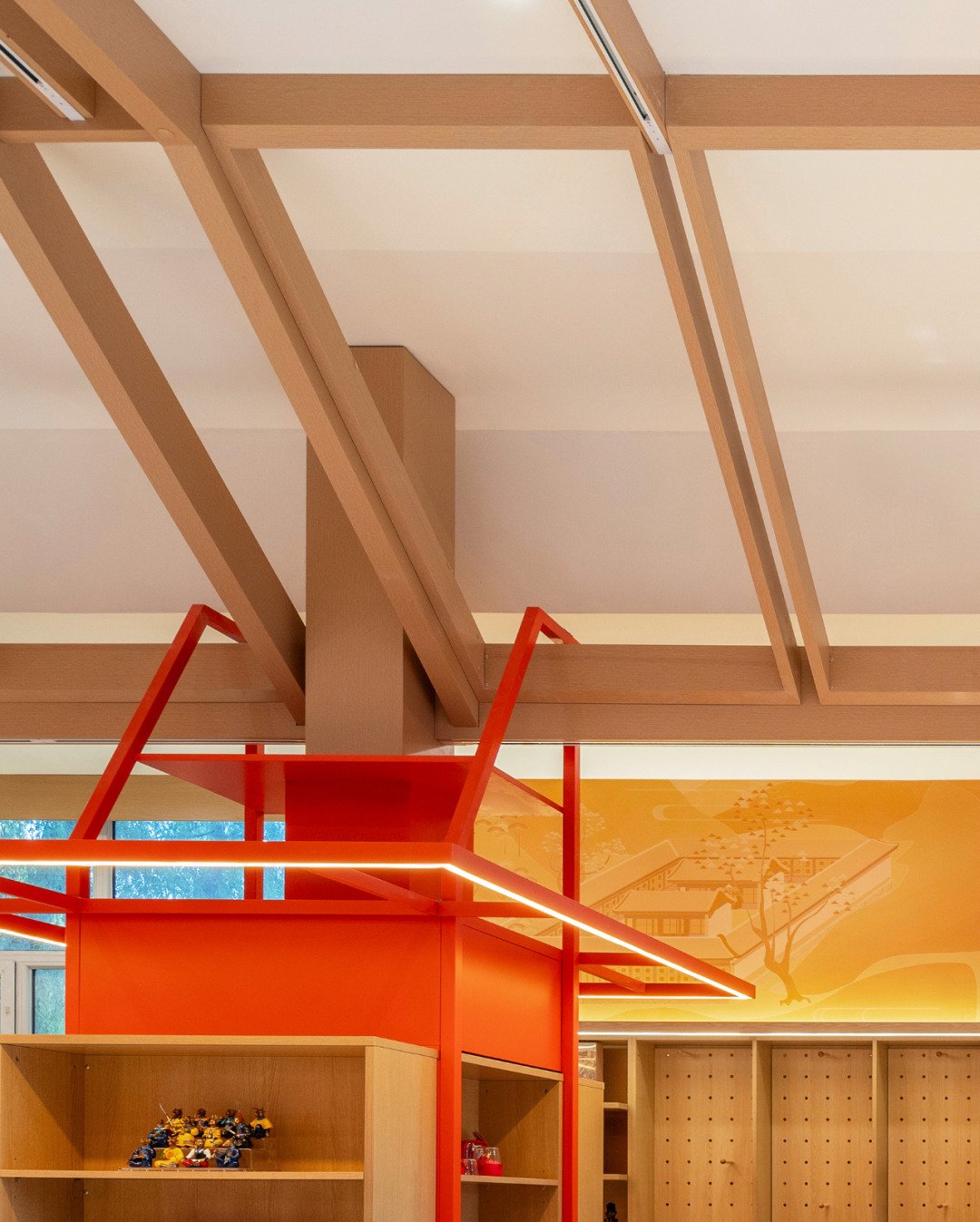
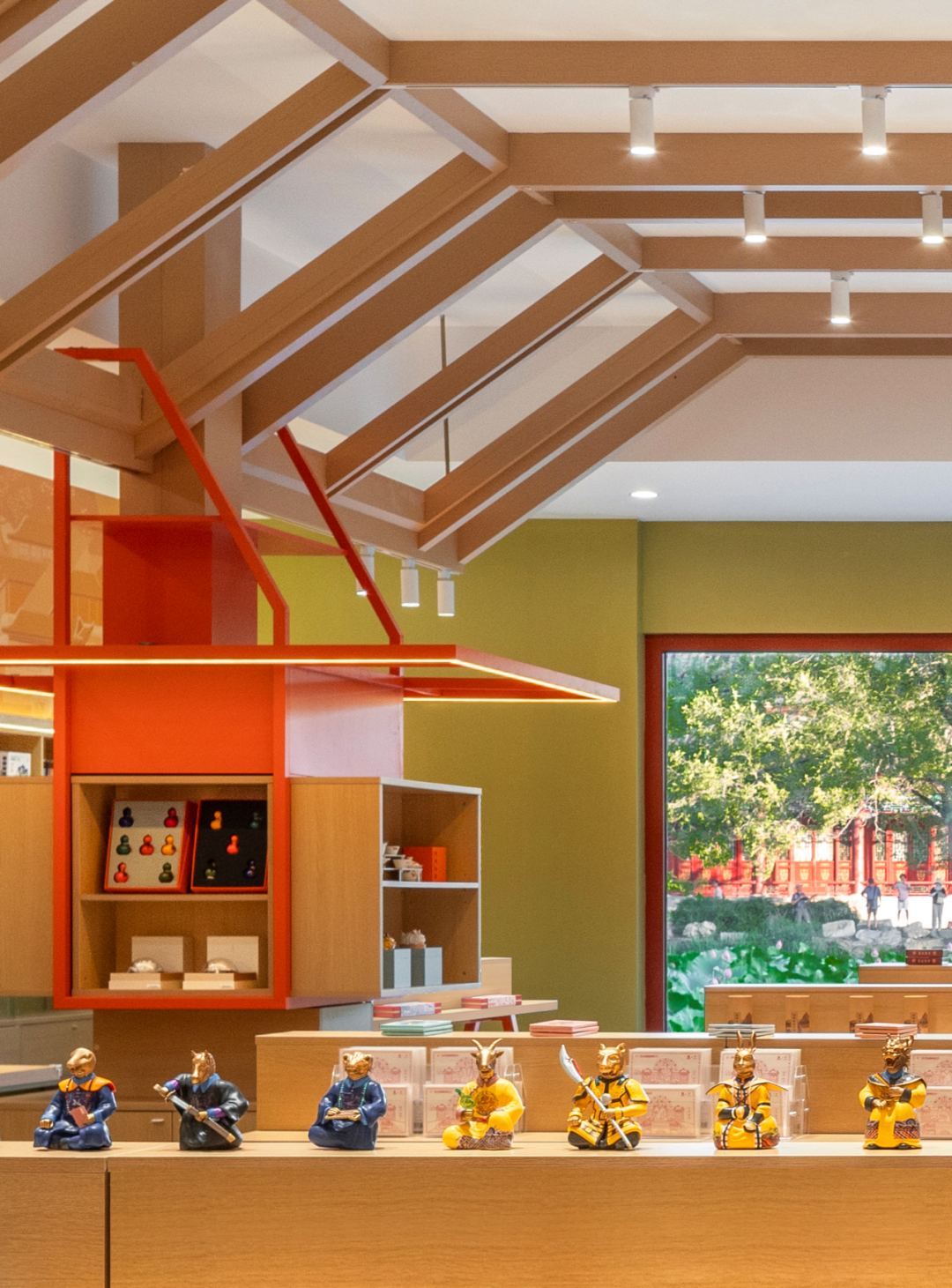
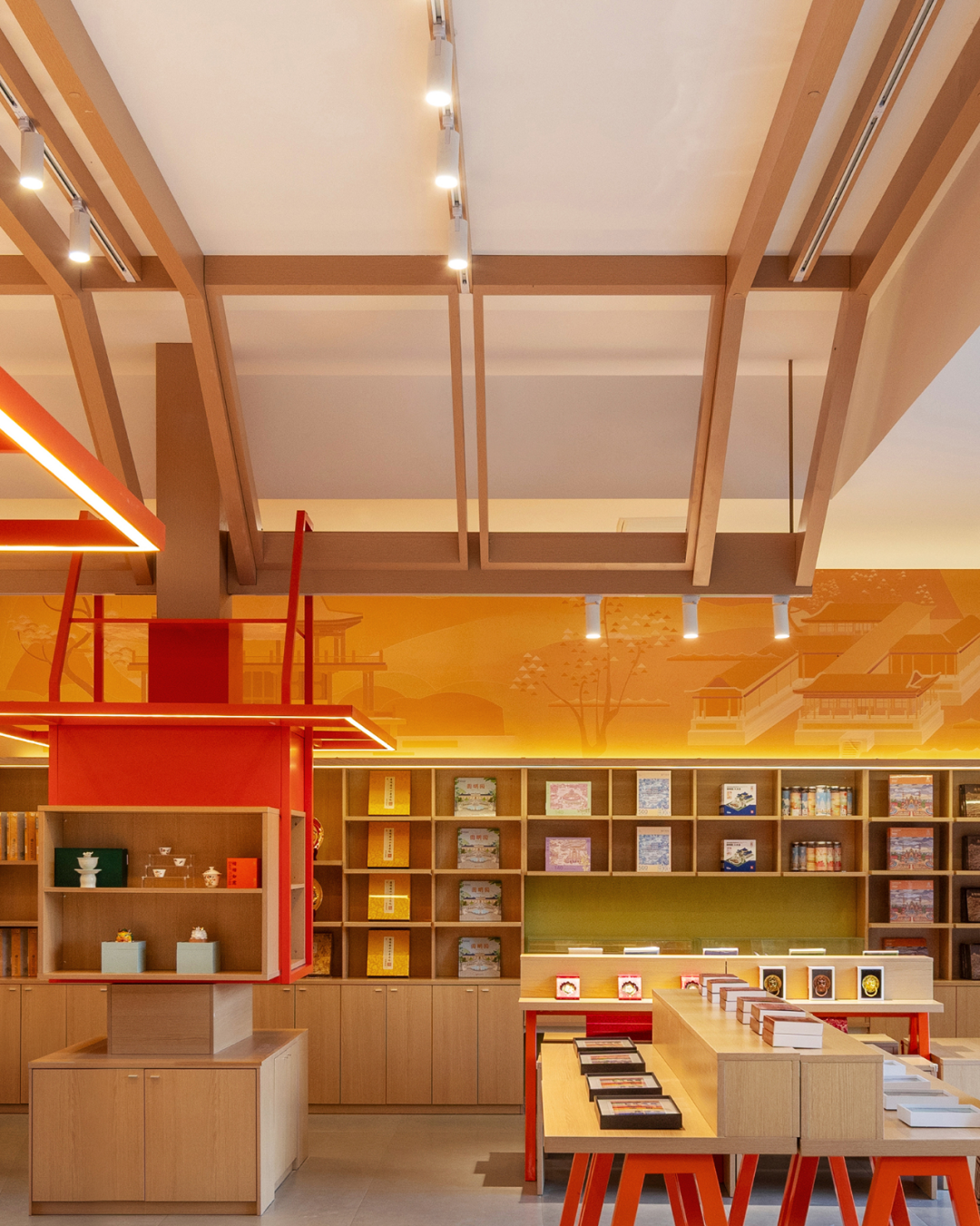
场地的特点在于其极佳的视野。顾客在室内可以清晰的看到室外大片荷花池和远处的鉴碧亭。为强化空间的通透性,屋顶的构想来自于清代夏日从皇家到百姓在院落中普遍使用的凉篷”,也叫“天棚”“。这种形式既可以满足遮阳的功能,同时,构架本身也可以起到空间限定的作用。因此,其同样在街市商铺中也被广泛使用。身在棚架之下,游客可以在透过窗外树冠照射下来的阳光下享受悠闲的购物时光,仿佛置身于风景中的市集。
The characteristic of the venue is its excellent view. Customers can clearly see the large outdoor lotus pond and the distant Jianbi Pavilion indoors. To enhance the transparency of the space, the concept of the roof comes from the cool canopy commonly used in courtyards from the royal family to the common people during the summer of the Qing Dynasty. This form not only satisfies the function of shading, but also serves as a spatial limitation for the structure itself. Therefore, it is also widely used in street markets and shops. Under the canopy, tourists can enjoy leisurely shopping time under the sunlight shining through the window canopy, as if they are in a scenic market.
△《甄嬛传》中皇家避暑的凉棚
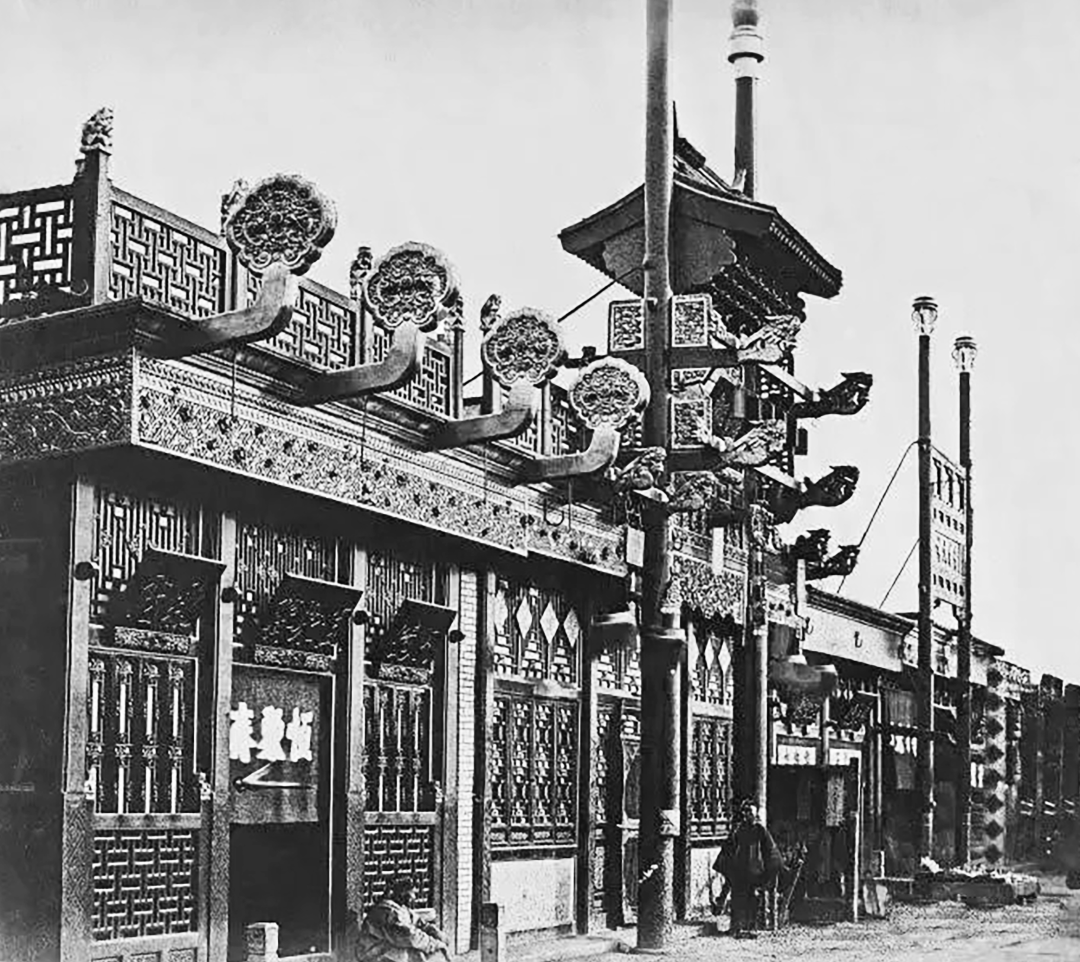
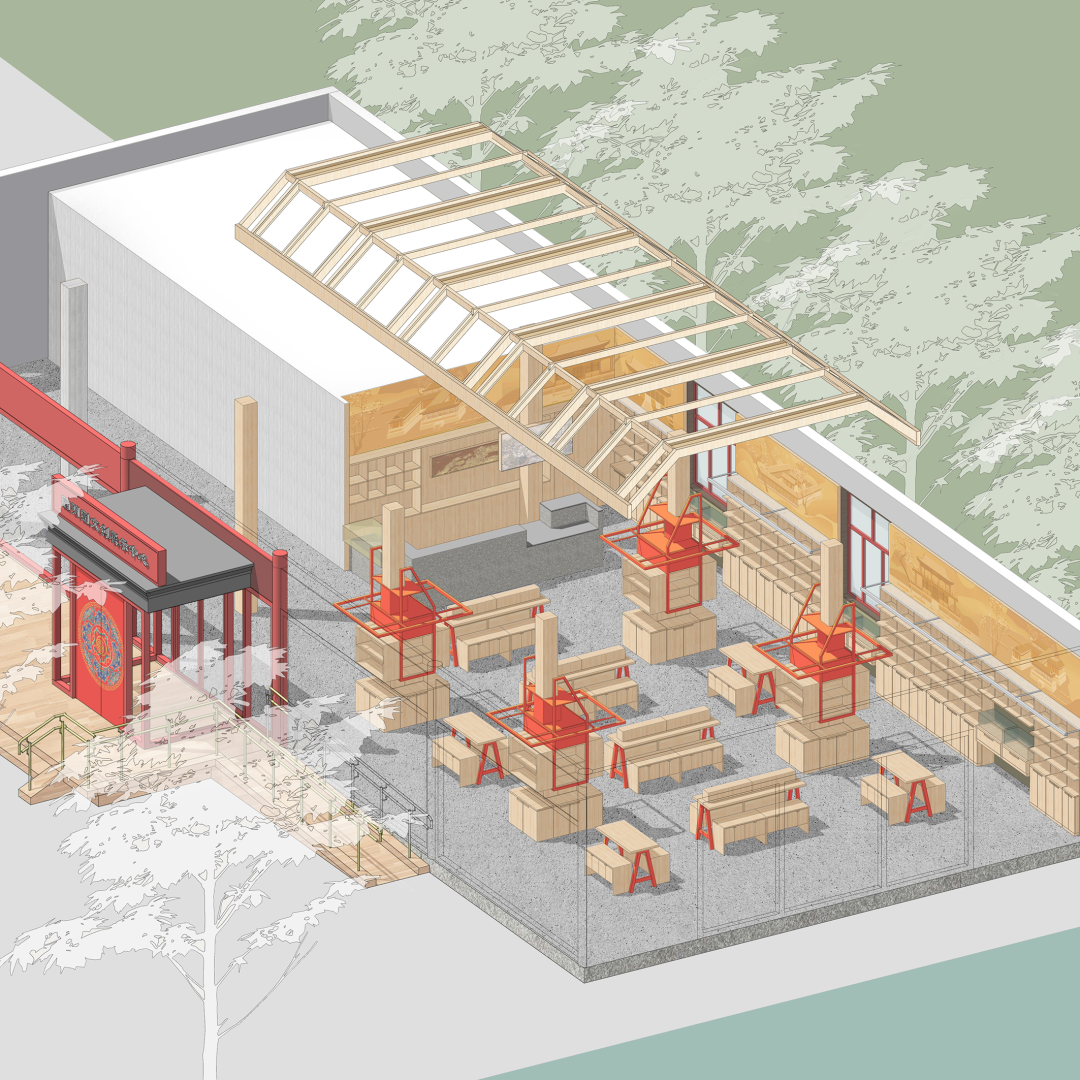
室内以四根柱子为核心所设置的固定货架,其形式灵感来自于流行于明清时期街市上的商业门面牌楼。这种牌楼由于两侧立柱远远高于门市房顶,顾名为“冲天牌楼”,也叫“柱出头”式,用以吸引远处顾客视线。这一形式成为早期传统建筑中难得的商业设计元素。
The fixed shelves set up indoors with four pillars as the core are inspired by the commercial storefronts and archways popular in street markets during the Ming and Qing dynasties. This type of archway is called the "Sky Soaring Archway" or "Pillar Head" due to the fact that the columns on both sides are much higher than the roof of the store, which is used to attract customers from afar. This form became a rare commercial design element in early traditional architecture.
△1860年第二次鸦片战争时期英籍费利斯·比托拍摄的北京内城店铺
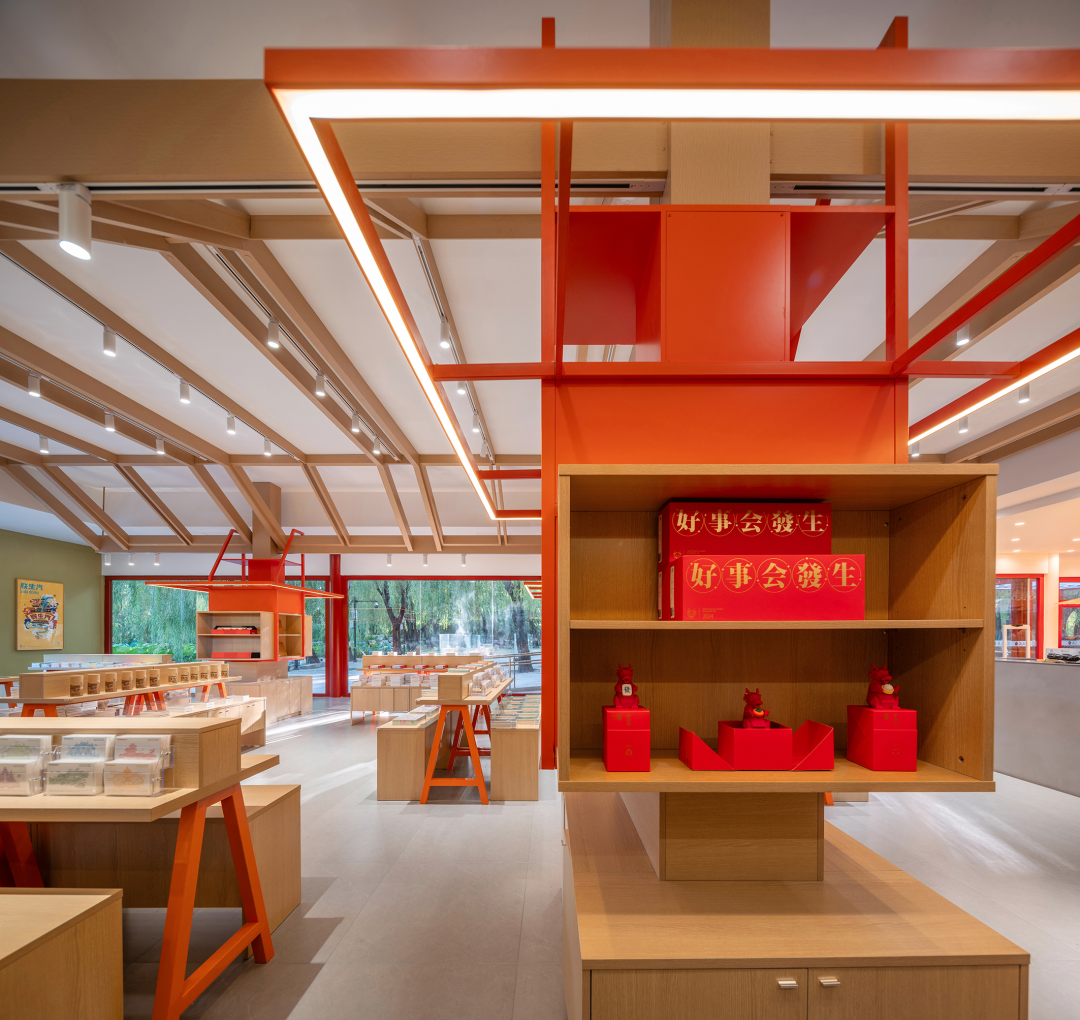
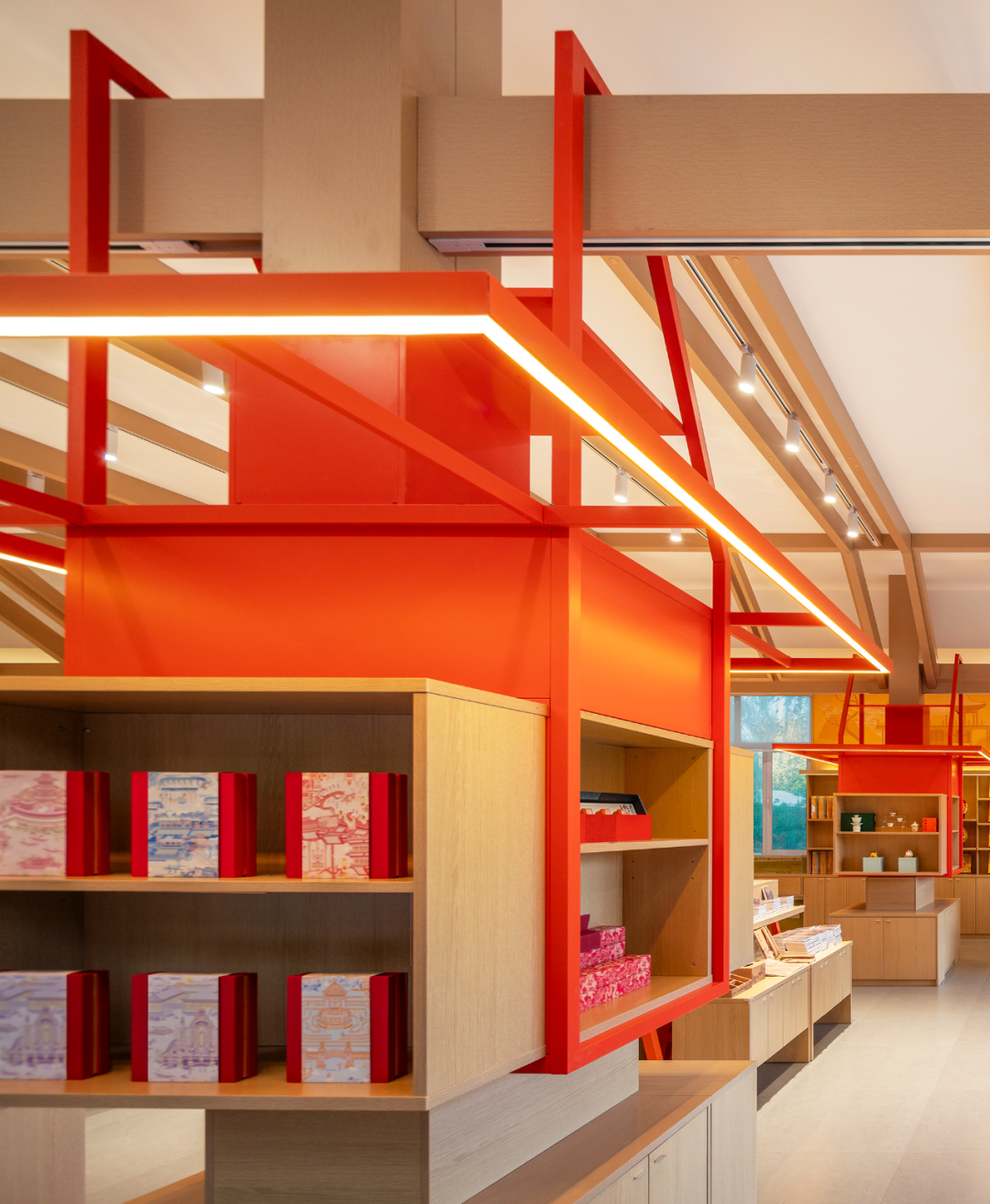
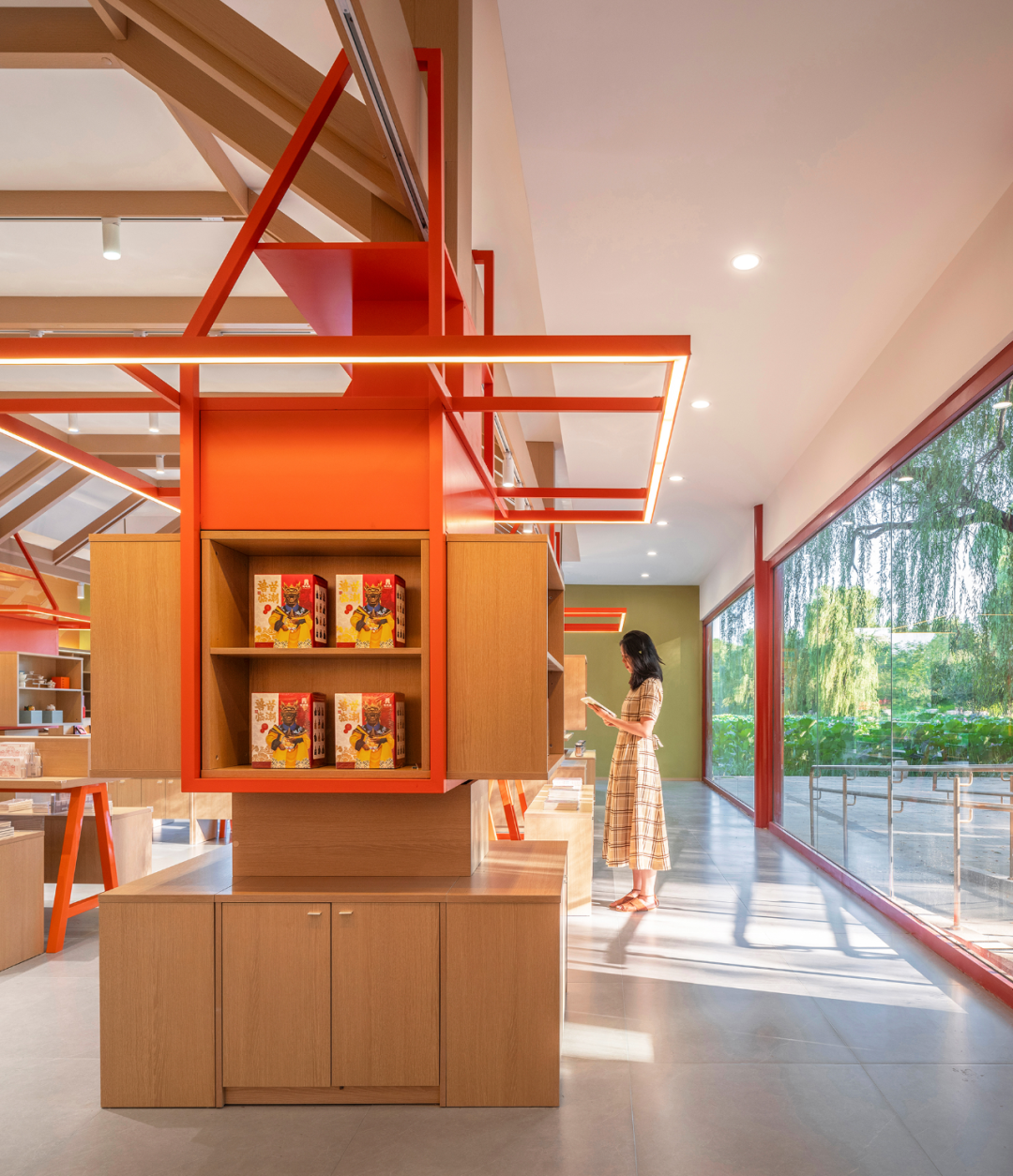
货架设计以“冲天牌楼”为原型进行了当代性的审美转译。具有工业风格的橘红色钢结构装置,在空间中构建出四组独特鲜明的“牌楼”。它们将产品陈列区进行强力聚合,以呈现绝佳的空间辨识度。
The shelf design has undergone contemporary aesthetic translation based on the prototype of the "soaring archway". The orange red steel structure installation with industrial style creates four unique and distinct "archways" in the space. They strongly aggregate the product display area to present excellent spatial recognition.
©杨宇
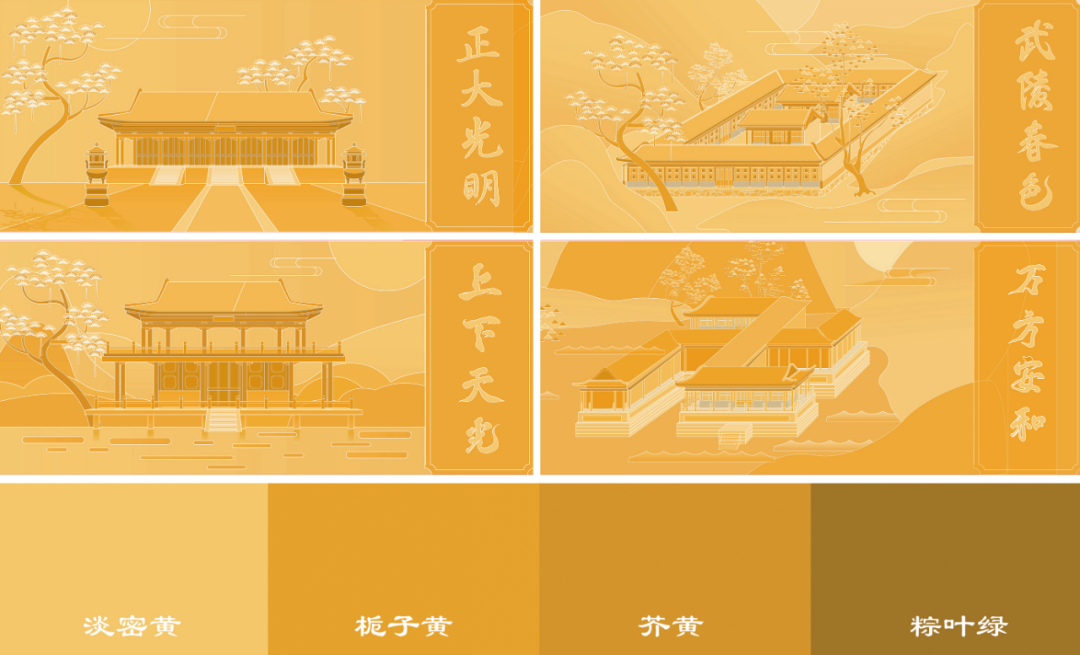
室内墙绘以亢建林老师的圆明园文创设计大赛获奖作品《圆明园门票设计》为蓝本进行主视觉的延展。画面题材来自于《圆明园四十景》中的建筑形象,为空间增添了带有圆明园历史记忆的文化元素。
The interior wall painting is based on the award-winning work "Yuanmingyuan Ticket Design" by Professor Kang Jianlin in's Yuanmingyuan Cultural and Creative Design Competition, and extends the main visual design. The theme of the painting comes from the architectural images in "Forty Scenes of Yuanmingyuan", adding cultural elements with historical memories of Yuanmingyuan to the space.
© 金伟琦
黄色既象征着清代皇权的尊贵与权利,同时也是他们所崇信的藏传佛教的圣色。因此,墙面绘画、墙面海报与家具材质配色融合了清代器物中所常用的栀黄,琥珀黄,明黄以丰富视觉层次,展现圆明园作为清代皇家园林的审美特征。
Yellow not only symbolizes the nobility and power of the Qing dynasty imperial power, but also the sacred color of Tibetan Buddhism that they revered. Therefore, the color matching of wall paintings, wall posters, and furniture materials integrates the commonly used gardenia, amber, and bright yellow colors in Qing Dynasty artifacts to enrich the visual hierarchy and showcase the aesthetic characteristics of Yuanmingyuan as a royal garden of the Qing Dynasty.
© 金伟琦
© 金伟琦
© 金伟琦
© 金伟琦
© 金伟琦
© 金伟琦
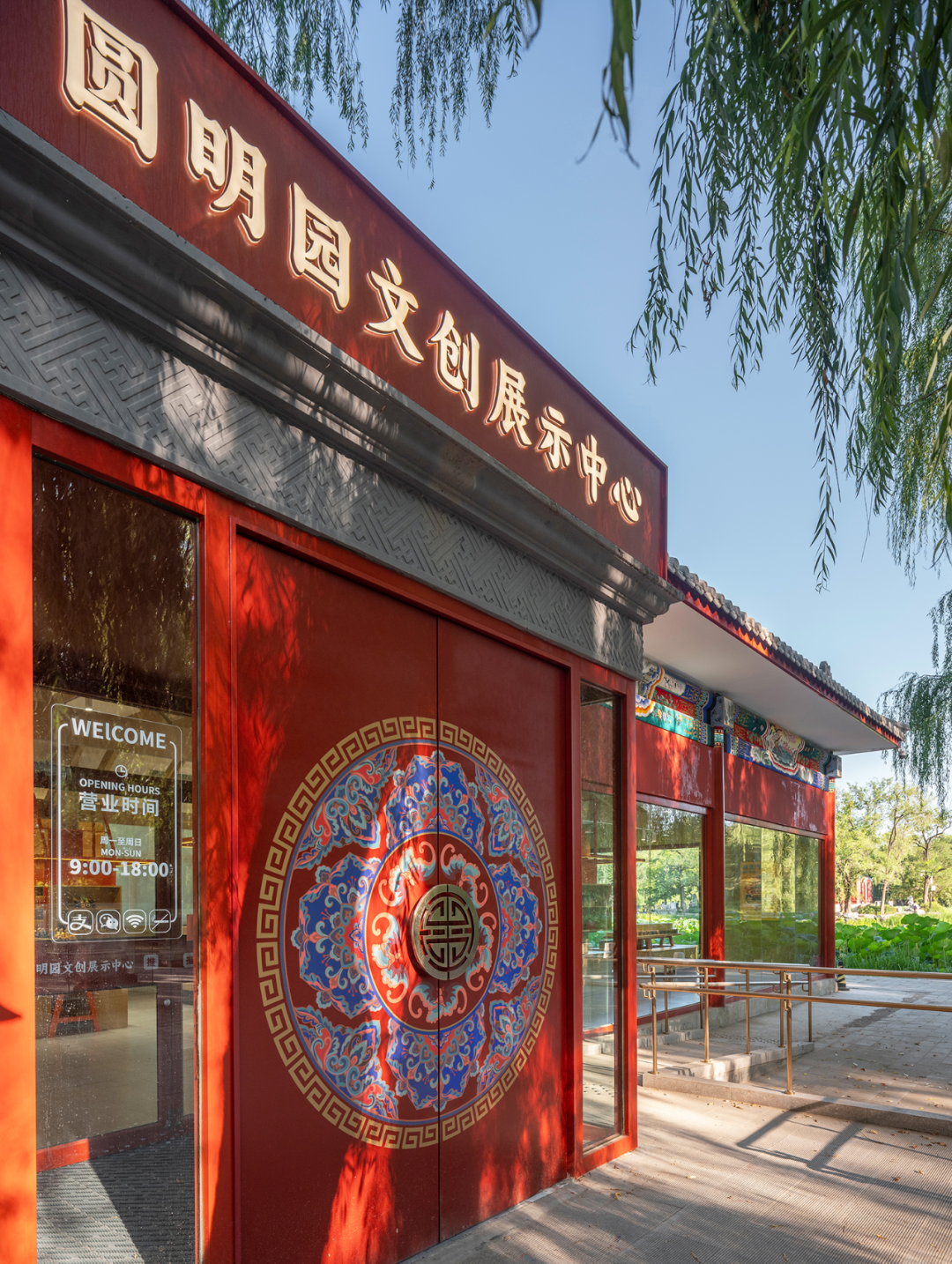
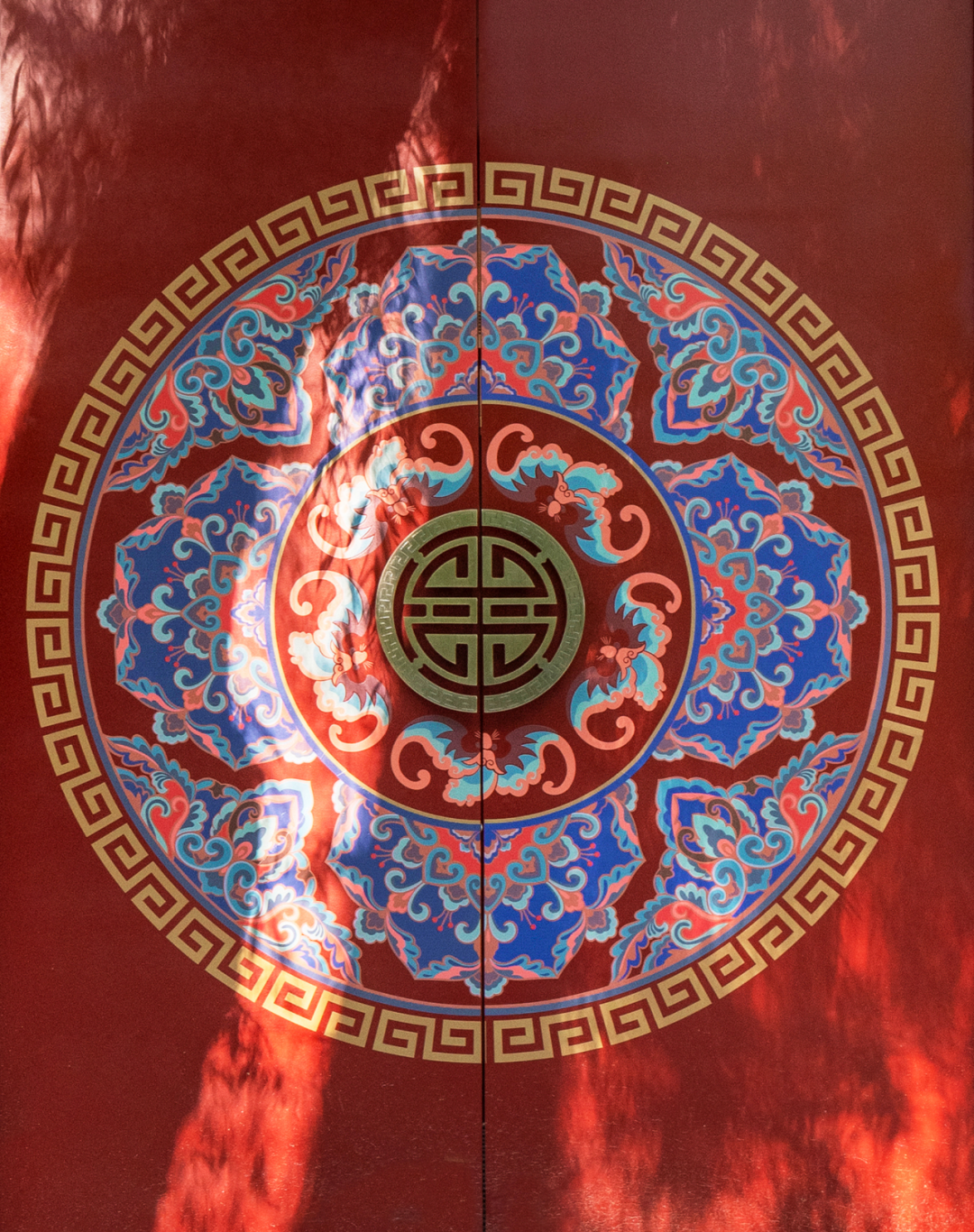
店铺大门的图案结合清代宝相花和福寿纹两种传统图案,在配色上加入了粉绿、湖蓝和琥珀黄等更加年轻时尚的色彩元素。
The pattern of the store entrance combines two traditional patterns of Qing Dynasty Baoxiang Flower and Fushou Pattern, and incorporates more youthful and fashionable color elements such as pink green, lake blue, and amber yellow in the color scheme.
© 亢建林,王婉晴、赵倩
© 金伟琦
文创展示空间的设计旨在以中国语境下的当代性视角,通过空间设计等元素塑造具有文化辨识度的圆明园旅游品牌形象,为游客提供一个具有归属感的文化空间。
The design of the cultural and creative exhibition space aims to shape a culturally recognizable tourism brand image of Yuanmingyuan from a contemporary perspective in the Chinese context through elements such as spatial design, providing tourists with a cultural space with a sense of belonging.
© 金伟琦
© 金伟琦
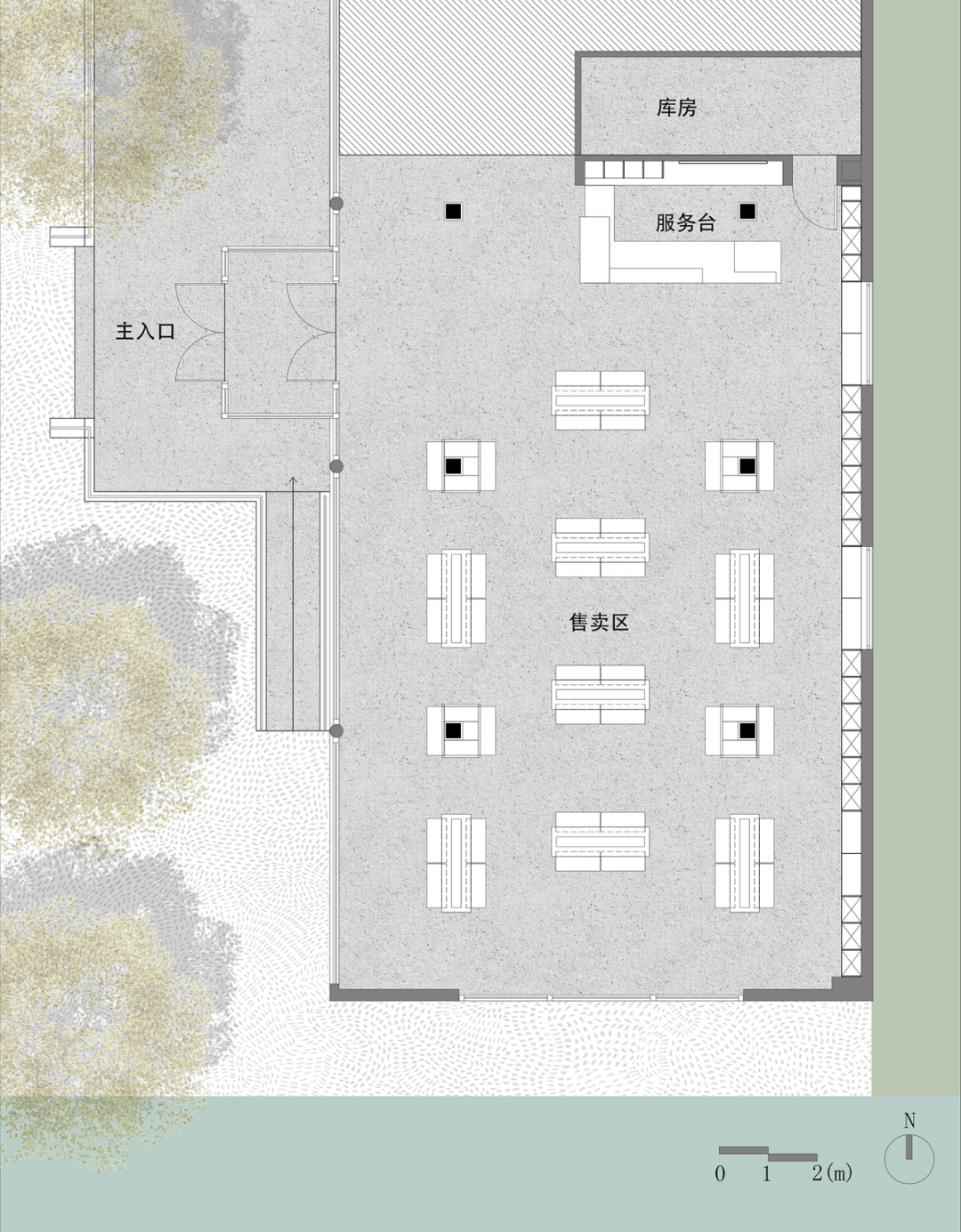
▼平面图
©杨宇
▼剖透视图
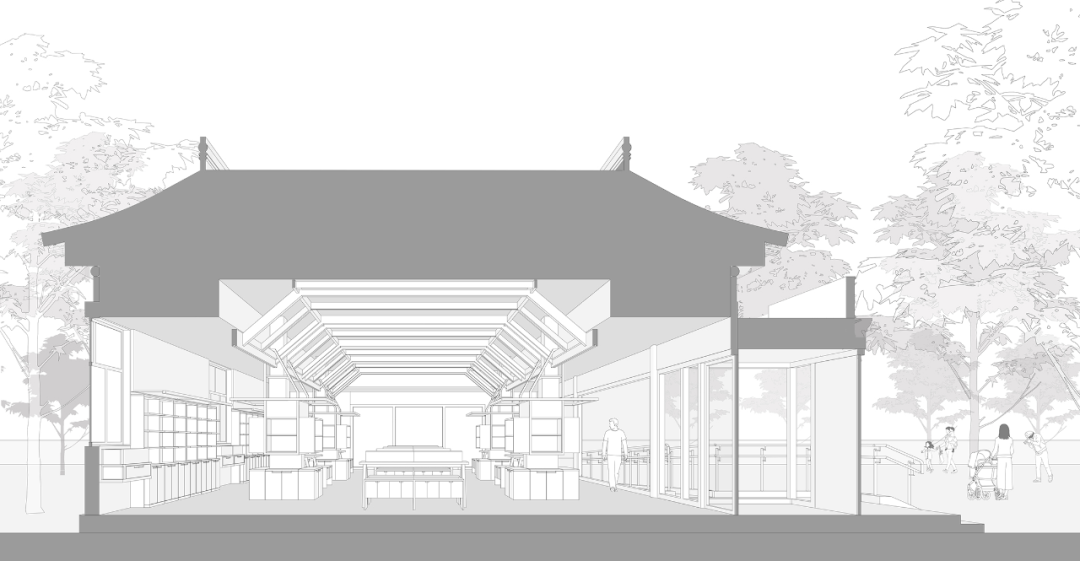
©杨宇
项目信息--
项目名称:圆明园文创展示中心
项目类型:文创店设计、零售店设计
项目地址:圆明园遗址公园
客户:圆明园遗址公园
室内设计:中央美术学院圆明园研究中心
项目统筹:吴晓敏
主创及设计团队:杨宇
视觉设计:亢建林,王婉晴,赵倩
建筑面积:110㎡
设计年份/建成年份:2024.7
摄影版权:金伟琦