- 深圳光明小镇企业展厅设计案例 | 立方设计“迳口复兴”展览建筑
-
2025-11-10
该展览以“迳口复兴”为主题,邀请了艺术家、农业发展专家、城市研究学者、建筑师、民间团队建筑、影像工作者等团队,以文献展览、装置、农业讲习所、户外电影放映、声音工作坊等方式,尝试寻找一种非经济导向的发展模式和激活社区的机会,也是对当下未知的探索。开幕式吸引了当地民众以及远道而来的观众参观,主展馆以简洁、轻盈的造型和极具现代感的设计,让人一眼就辨认出。展厅周边是当地民居、菜地和绿田,展厅之外,有村民在锄地耕种,孩童玩耍,一股自然淳朴的乡村气息扑面而来。
The exhibition, with the theme of "Jingkou Revitalization", invited artists, agricultural development experts, urban research scholars, architects, civil team architects, image workers and other teams to explore a non economic oriented development model and opportunities to activate communities through literature exhibitions, installations, agricultural workshops, outdoor film screenings, sound workshops and other means. It is also an exploration of the unknown at present. The opening ceremony attracted local residents and visitors from afar. The main exhibition hall, with its simple, lightweight design and modern feel, is easily recognizable at a glance. Surrounding the exhibition hall are local residential buildings, vegetable fields, and green fields. Outside the exhibition hall, villagers are hoeing and farming, while children are playing, creating a natural and rustic rural atmosphere.
光明小镇企业展厅
Guangming Town Enterprise Exhibition Hall
-- -
规划 | 隐于民居
Planning | Hidden in Residential Buildings
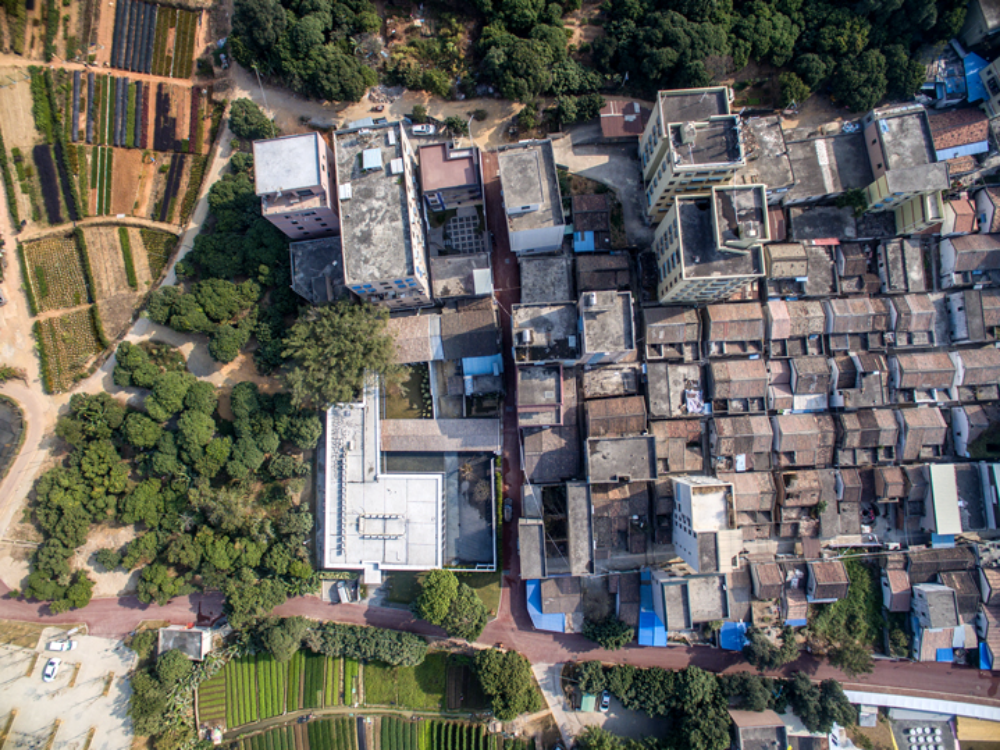
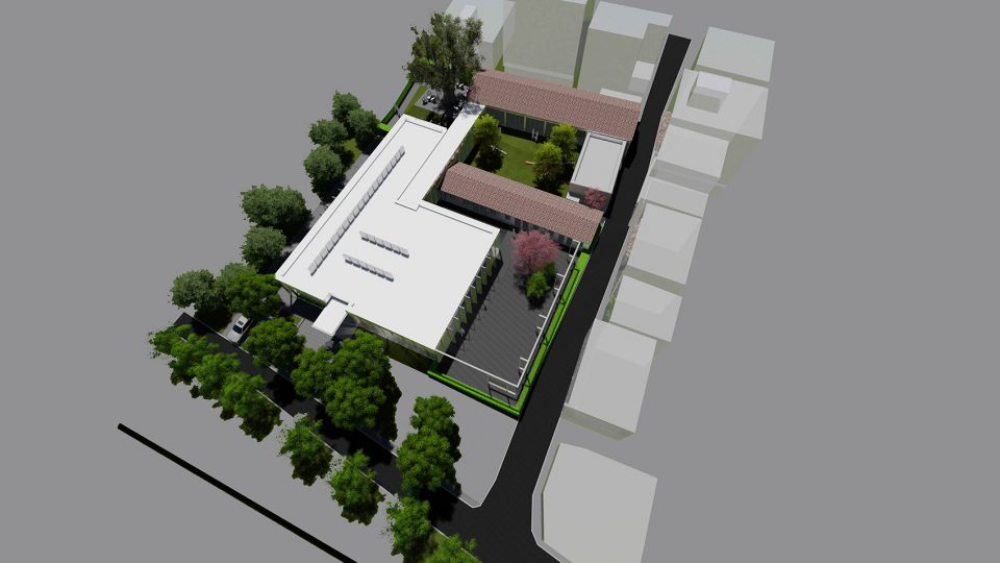
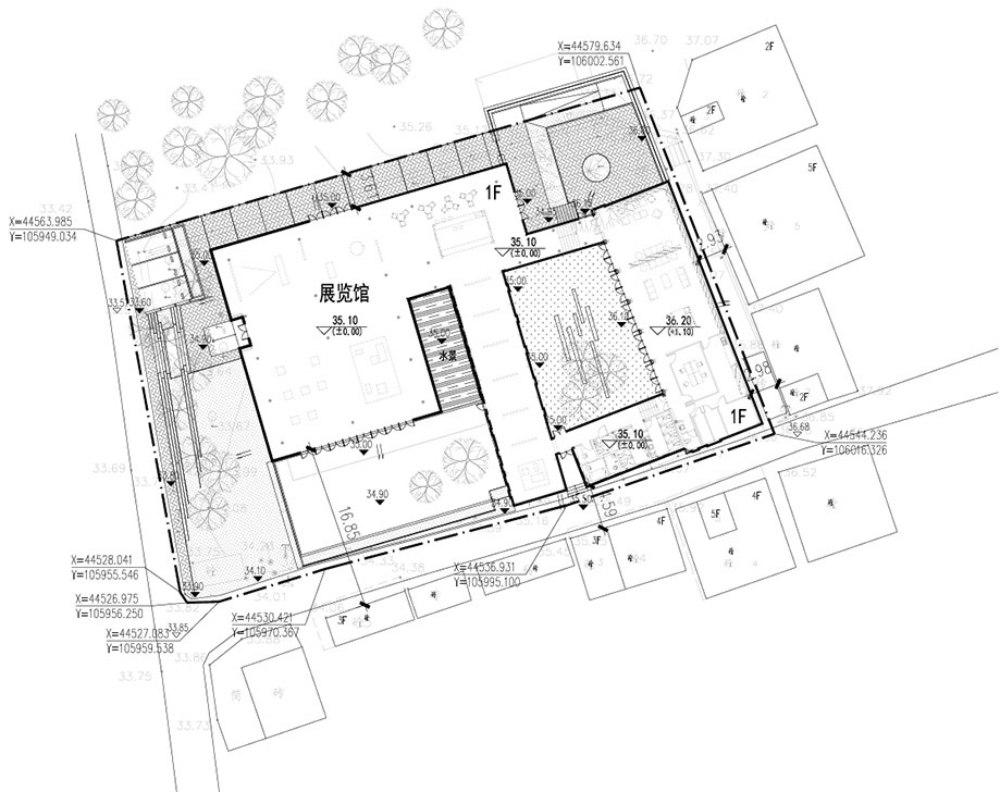
此次展览主展场由立方设计,项目被要求满足深双展光明分展布展的同时,后期还将作为华侨城光明小镇项目的企业展厅,继续保留使用。项目位于光明新区迳口社区,占地面积2250㎡。场地北侧是郁郁葱葱的荔枝林,南侧为村路,西侧正门朝向广东省绿道,东侧是居民住宅。场地原来是老旧的砖混结构房屋,在方案设计构思中,建筑师极力保留原有老建筑物,在实现新功能、新生命、新面貌建造的同时,保留着新旧的联系。整体规划思路为拆除中间一排老屋,改建现有煤气站并保留东西侧两栋老房子约392㎡,在此基础上增加新建建筑。新建建筑主体位于场地西北角,通过连廊将两栋老建筑与新建筑进行连接,形成统一整体。
The main exhibition venue of this exhibition is designed by Cube, and the project is required to meet the requirements of the Shenzhen Shuang Exhibition Guangming Branch Exhibition. At the same time, it will also serve as the enterprise exhibition hall for the Overseas Chinese Town Guangming Town project and continue to be preserved and used. The project is located in Jingkou Community, Guangming New District, covering an area of 2250 square meters. On the north side of the site is a lush lychee forest, on the south side is a village road, on the west side the main entrance faces the Guangdong Provincial Greenway, and on the east side are residential buildings. The site was originally an old brick and concrete structure house. In the conceptual design, the architect made every effort to preserve the original old building, while achieving new functions, new life, and new appearance construction, while preserving the connection between old and new. The overall planning concept is to demolish a row of old houses in the middle, rebuild the existing gas station, and retain two old houses on the east and west sides of about 392 square meters, and add new buildings on this basis. The main body of the new building is located in the northwest corner of the site, connecting the two old buildings with the new building through a corridor to form a unified whole.
建筑 | 新旧对话
Architecture | Dialogue between Old and New
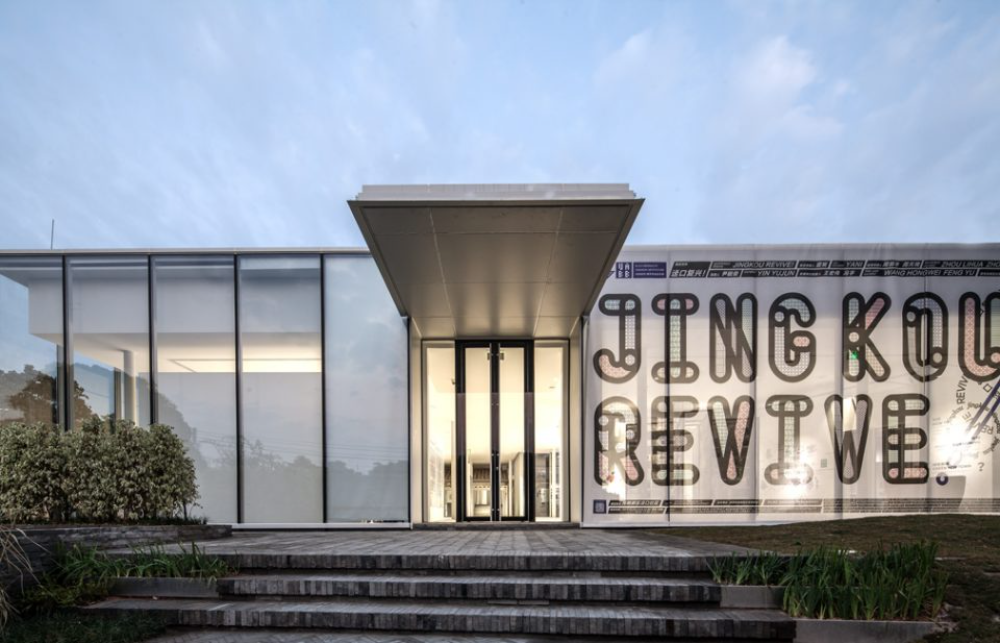
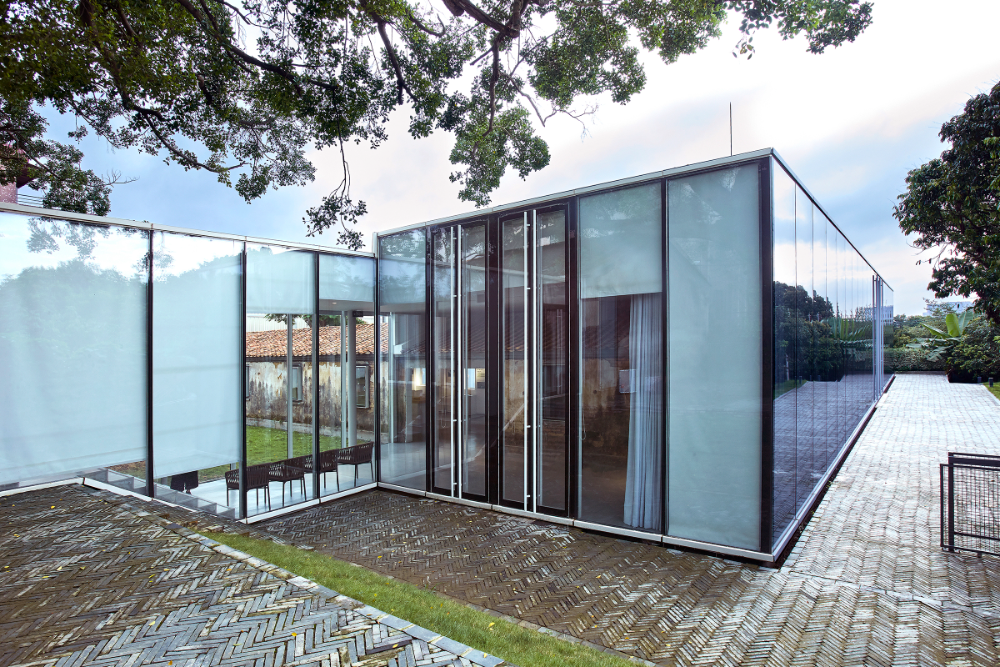
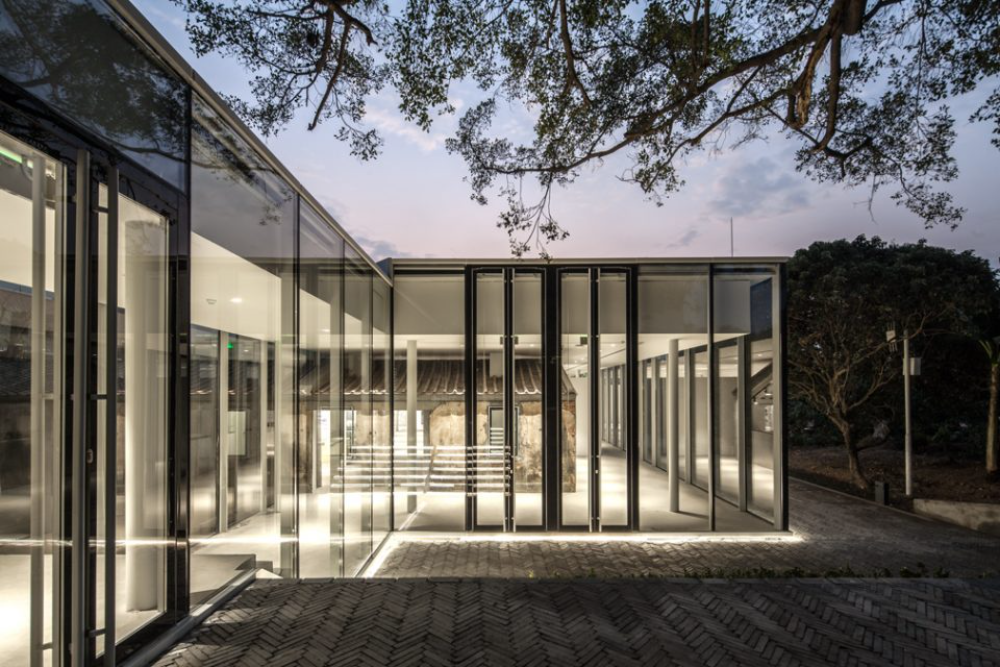
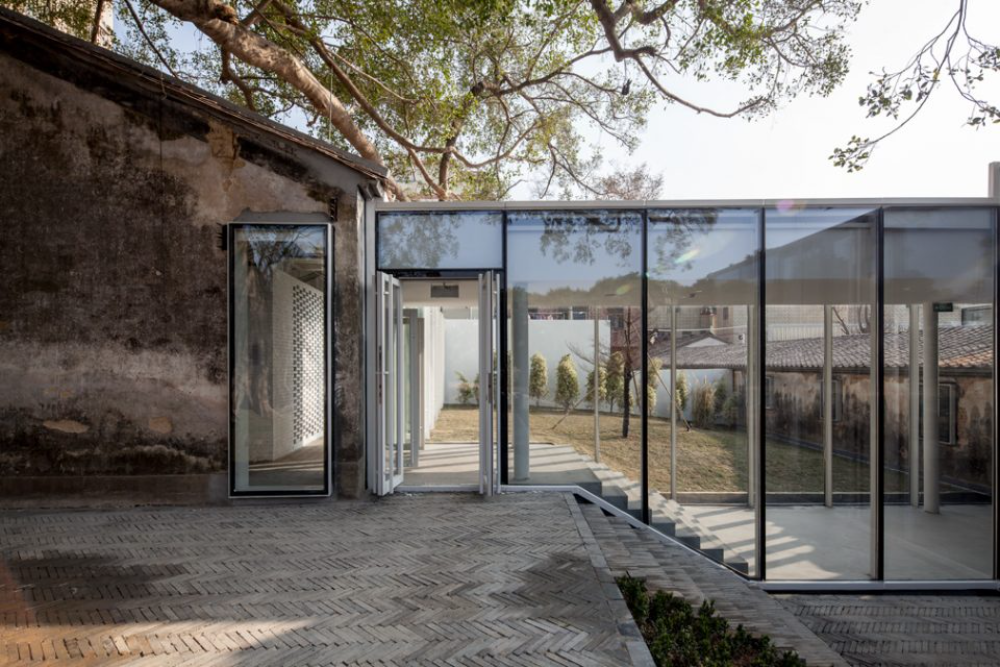
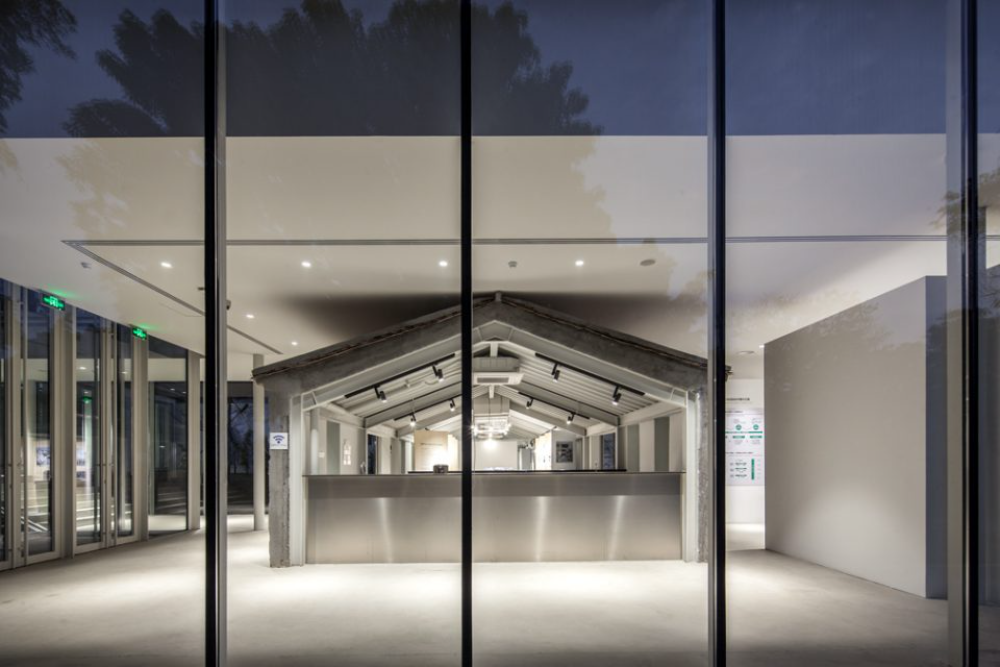
新建筑追求现代简洁风格,与周围古旧民居产生强烈的对比,并在功能、空间和视觉上实现新旧共生。建筑以轻质的金属和透明的玻璃来限定室内外空间,结合钢结构的使用,营造出轻盈、透明的视觉形象。通透的玻璃墙面最大程度的吸纳树林景观,并映射周围民居倒影,模糊了室内外边界,降低自身的存在感,由此与周边环境建立起一种相融相生的微妙和谐关系。
The new building pursues a modern and simple style, creating a strong contrast with the surrounding ancient residential buildings, and achieving a symbiotic relationship between old and new in terms of functionality, space, and visual appeal. Buildings use lightweight metal and transparent glass to define indoor and outdoor spaces, combined with the use of steel structures to create a lightweight and transparent visual image. The transparent glass wall maximizes the absorption of the forest landscape and reflects the reflection of surrounding residential buildings, blurring the indoor and outdoor boundaries and reducing its own sense of existence, thus establishing a subtle and harmonious relationship with the surrounding environment.
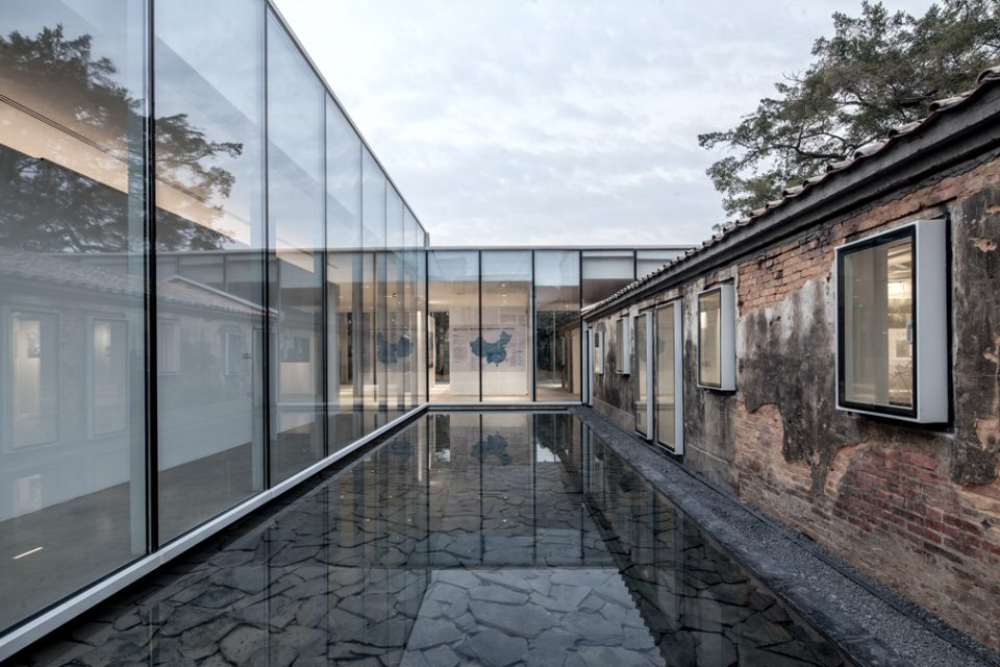
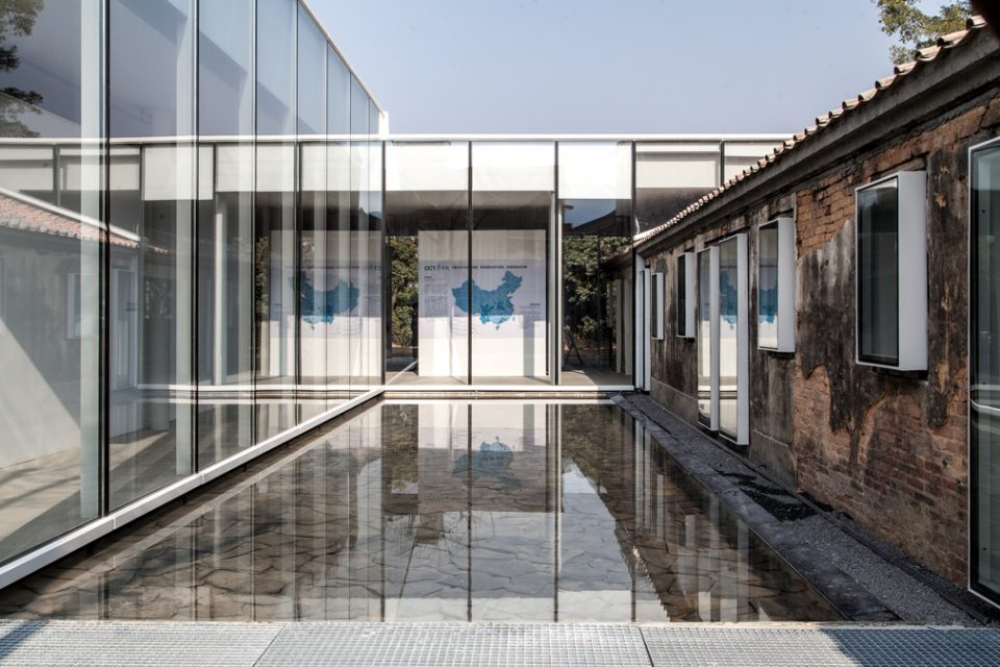
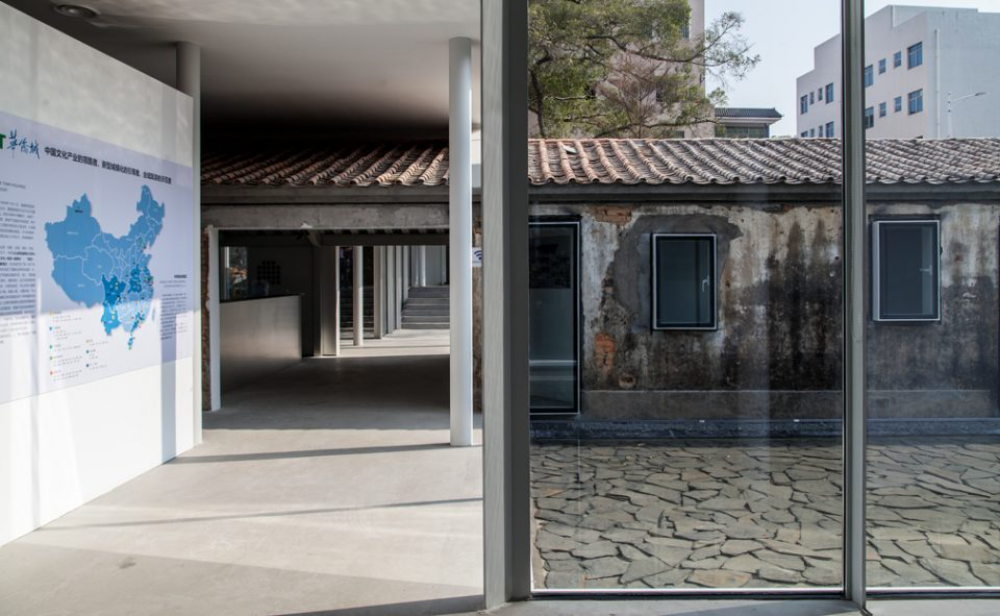
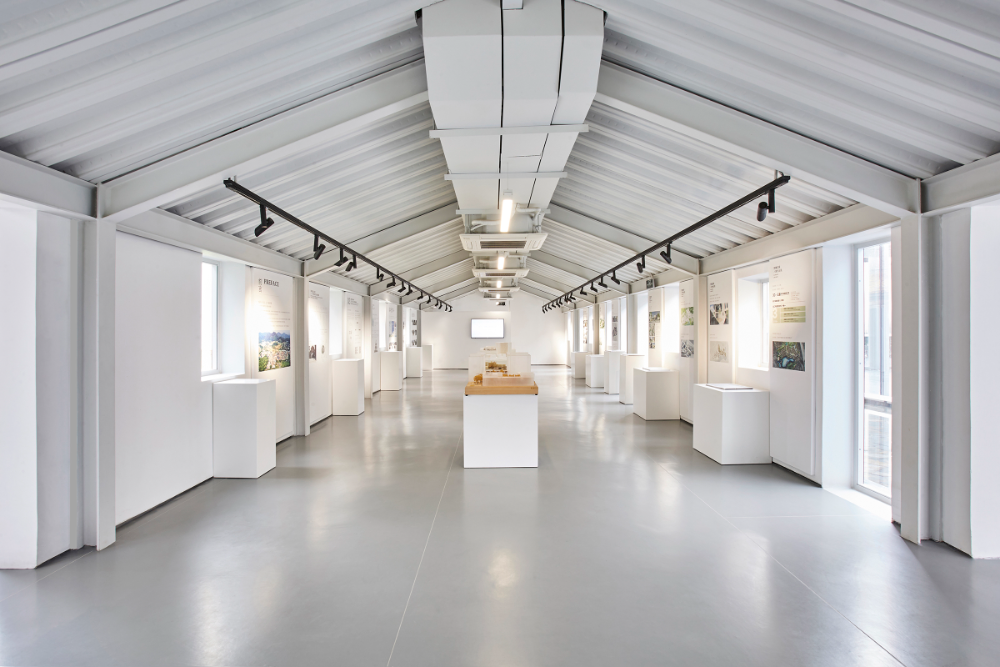
两栋老建筑拆除中间分隔墙后对保留的外围墙体进行结构加固,并涂刷保护剂,保留墙面斑驳的质感。屋顶原来破旧的混泥土梁被拆除,采用钢架重建屋架结构,并盖上回收旧瓦,新与旧的语汇得以重新排列组合,原有建筑被赋予新语言、新空间、新功能、新生命力,新老建筑与环境达到共生统一。旧建筑的门窗洞口依然被保留,以减少对原有墙体的破坏。新建门窗采用不分割整块高透超白边框,轻盈现代的玻璃金属材质与墙上的斑驳痕迹形成新与旧、历史与现代的有趣对话。
After demolishing the middle partition wall of two old buildings, the remaining peripheral walls were structurally reinforced and coated with protective agents to preserve the mottled texture of the walls. The old concrete beams on the roof have been removed, and a steel frame has been used to rebuild the roof structure. Recycled old tiles have been added, allowing for a rearrangement and combination of new and old vocabulary. The original building has been endowed with new language, space, function, and vitality, achieving a symbiotic unity between the old and new buildings and the environment. The door and window openings of the old building are still preserved to reduce damage to the original walls. The newly built doors and windows adopt an undivided high transparency ultra white frame, and the lightweight and modern glass metal material forms an interesting dialogue between the new and the old, history and modernity with the mottled marks on the wall.
景观 | 老树·老房·新景
Landscape | Old trees, old houses, new scenery
景观规划中,场地后方的大榕树被重点保留下来,成为景观的一部分。建筑中庭的水景作为新旧建筑之间的过渡以及户外景观成为庭院的视觉焦点,吸引过往参观人流。开幕式当天,这里也成为了艺术家艺术表演的场地。
In landscape planning, the large banyan tree at the back of the site was carefully preserved and became a part of the landscape. The water scenery in the courtyard serves as a transition between old and new buildings, and the outdoor landscape becomes the visual focus of the courtyard, attracting visitors from the past. On the day of the opening ceremony, this place also became a venue for artists' artistic performances.
空间 | 序列趣味
Space | Sequence Fun
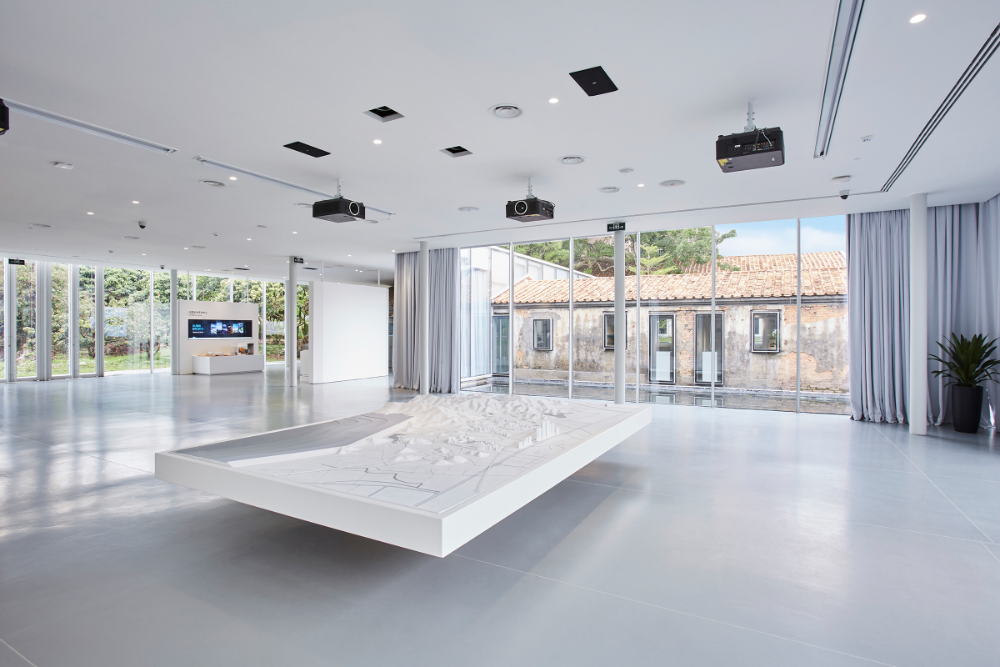
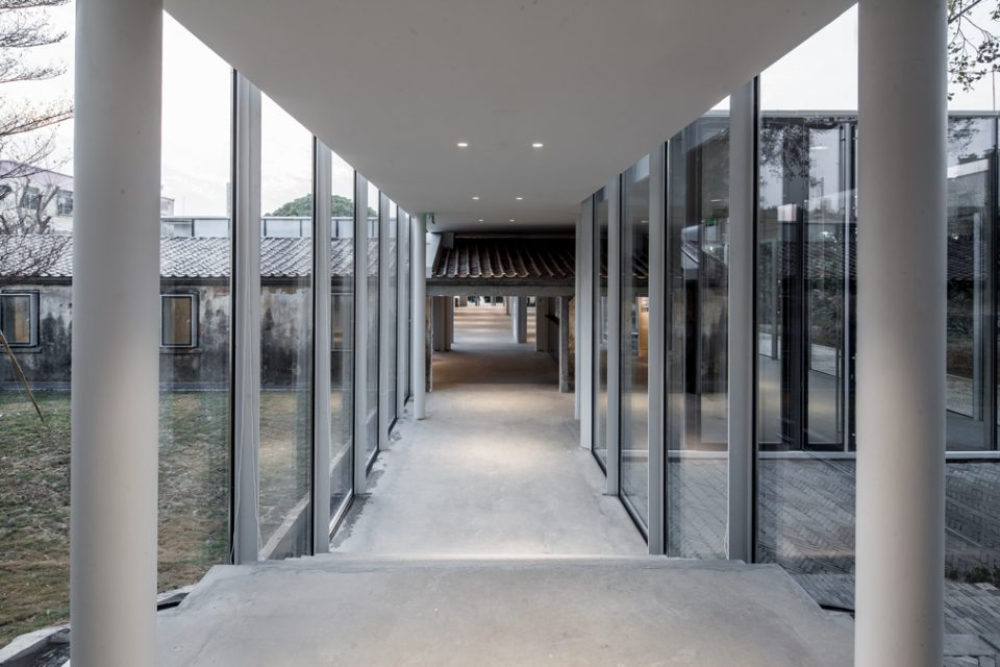
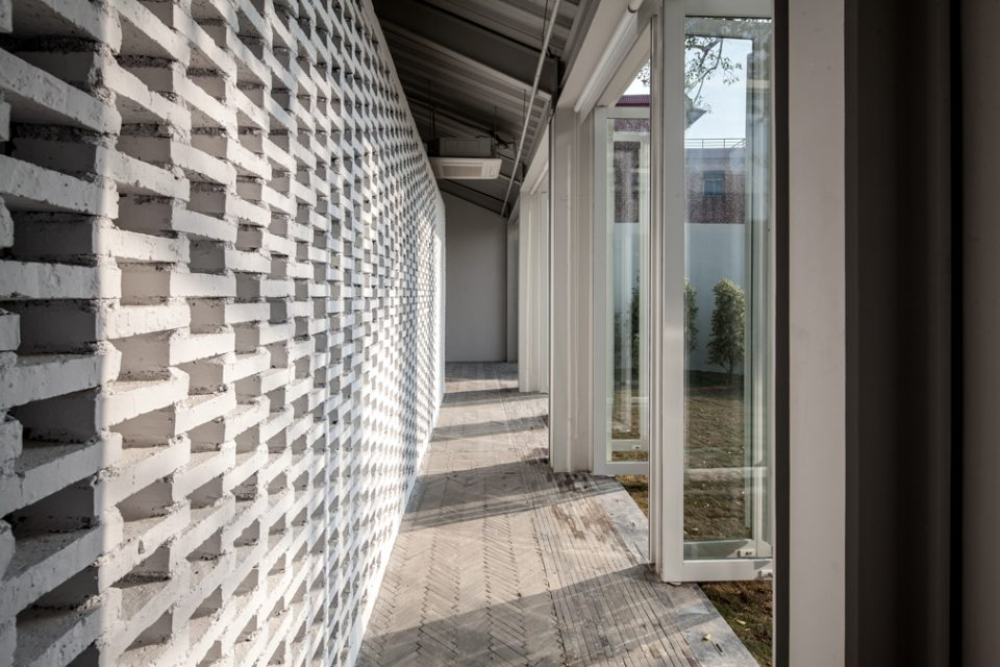
建筑平面无明确限定,使建筑具备灵活性和流动性。室内无过多装饰,墙面只做简单的粉刷处理,把更多发挥空间和焦点留给展览作品。虽然建筑面积有限,但建筑师通过框景、留白、转折等手法拉开空间层次,营造丰富的空间序列,使其曲径通幽。这也是东方建筑设计中常用的建造手法,这些空间经过特定排布,带给人强烈的整体感和节奏感。
The architectural plan is not clearly defined, giving the building flexibility and fluidity. There is no excessive decoration indoors, and only simple painting treatment is done on the walls, leaving more space and focus for exhibition works. Although the building area is limited, architects use techniques such as framing, leaving blank spaces, and turning to create a rich spatial sequence, making it winding and secluded. This is also a common construction technique in Eastern architectural design, where these spaces are arranged in a specific way to give people a strong sense of unity and rhythm.
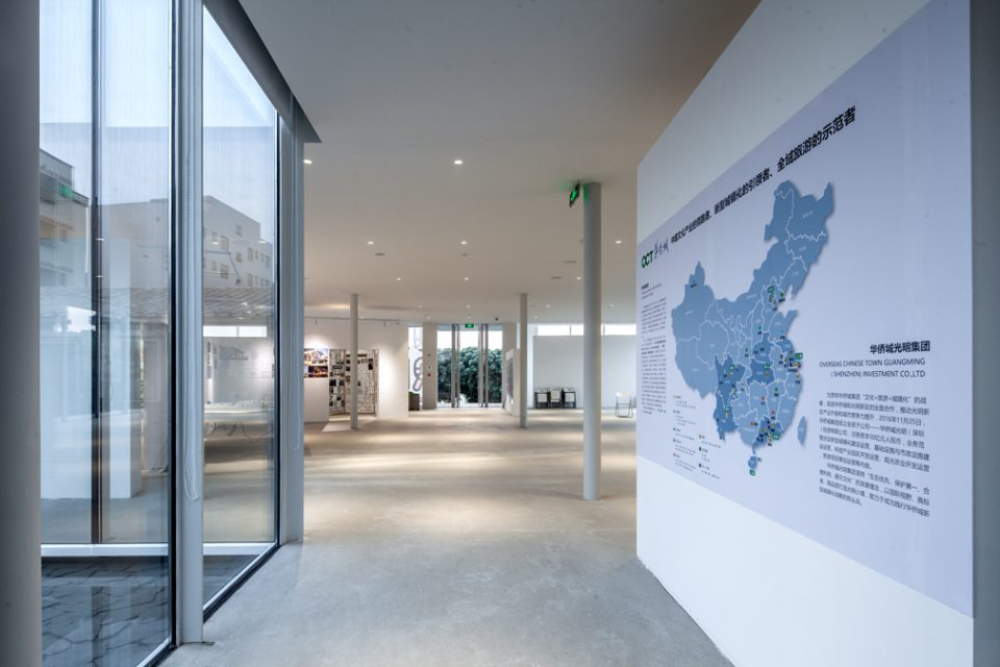
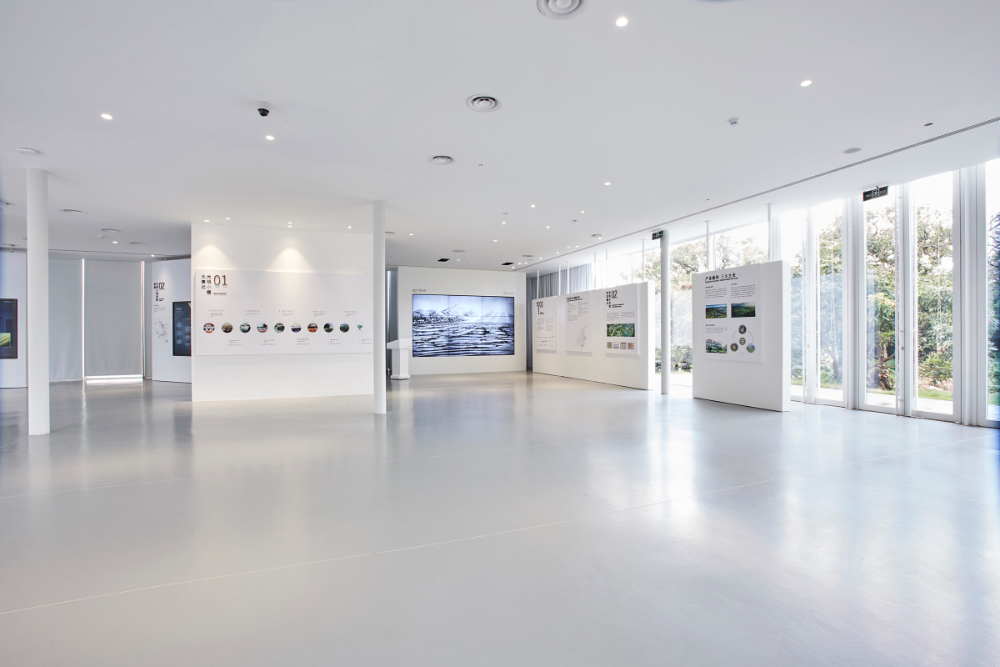
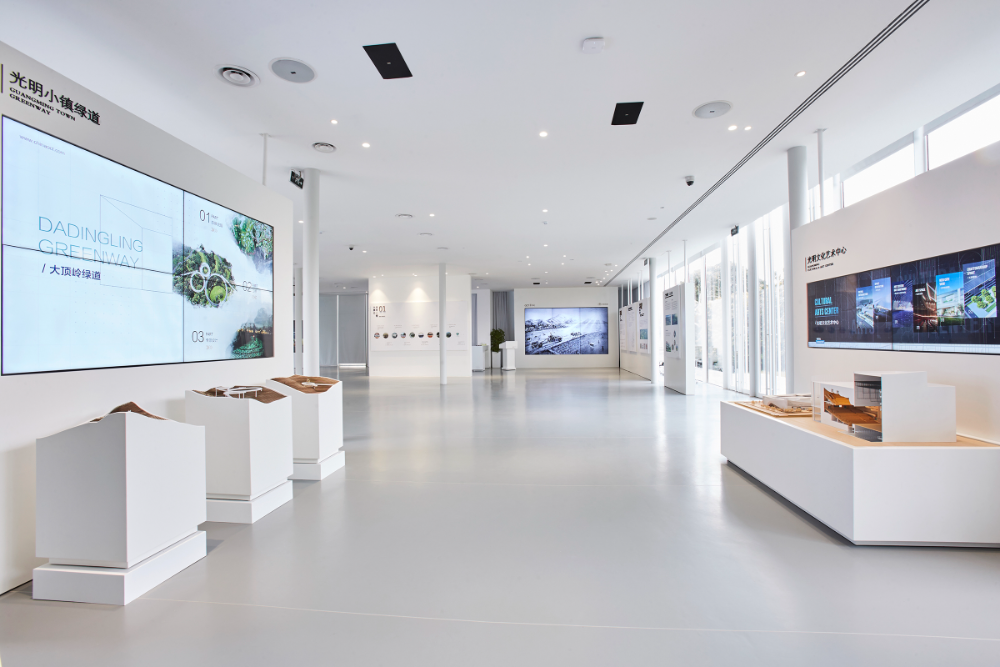
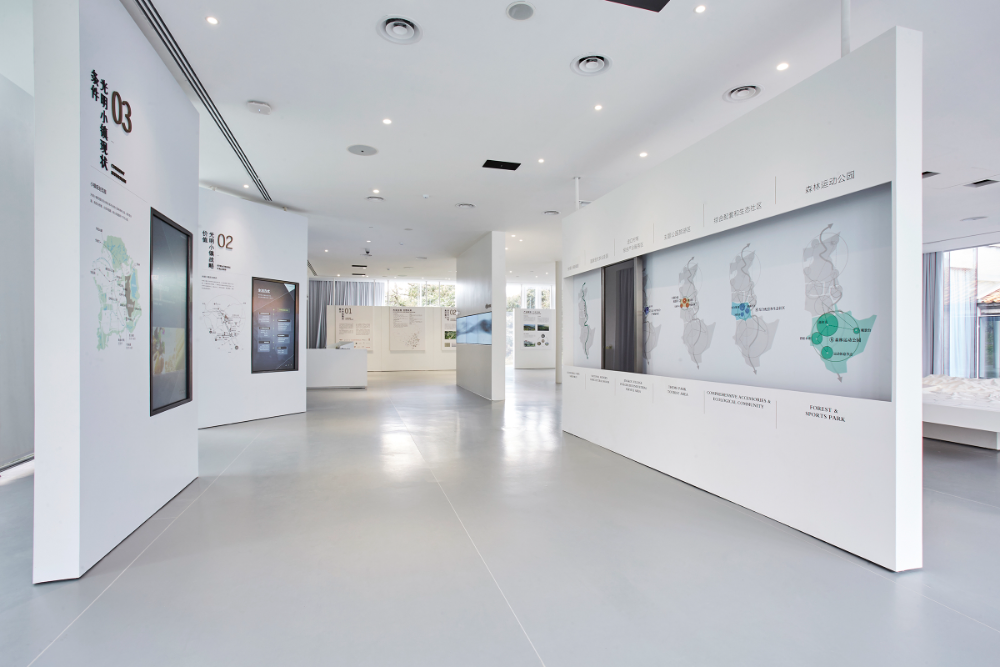
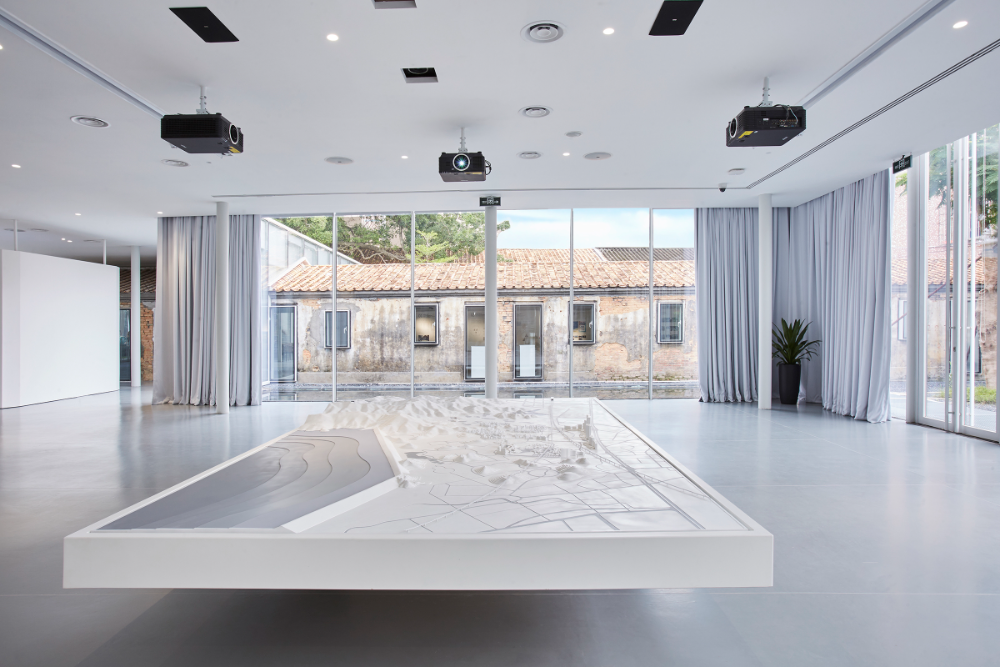
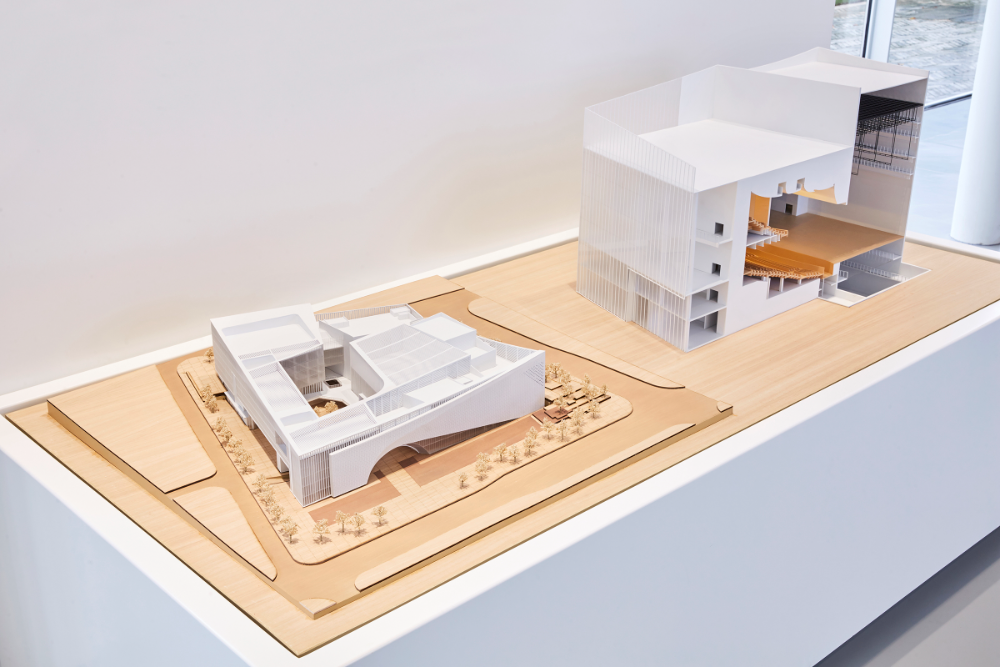
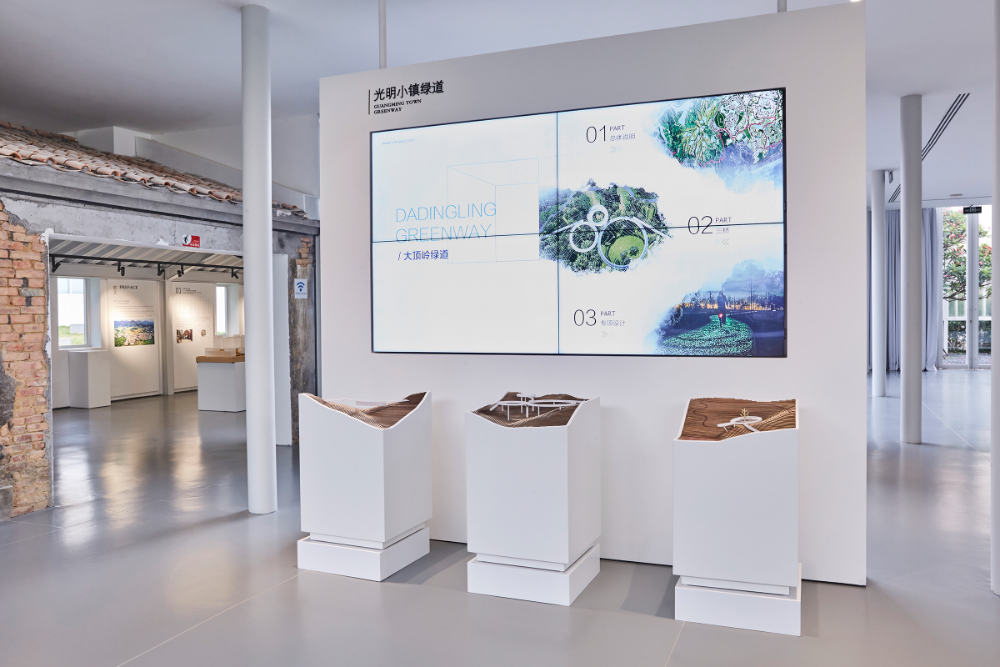
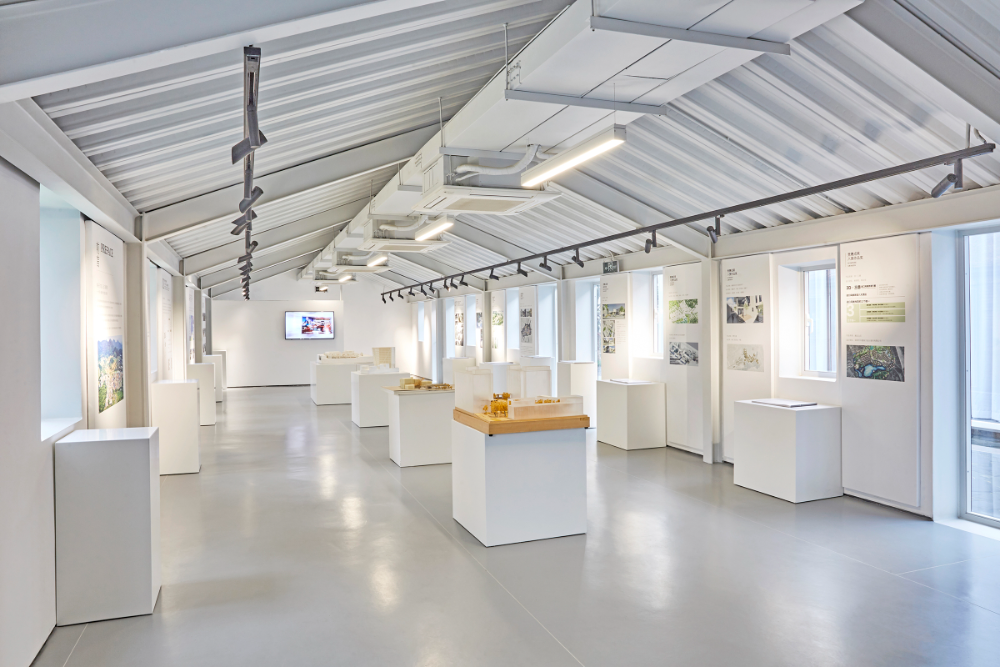
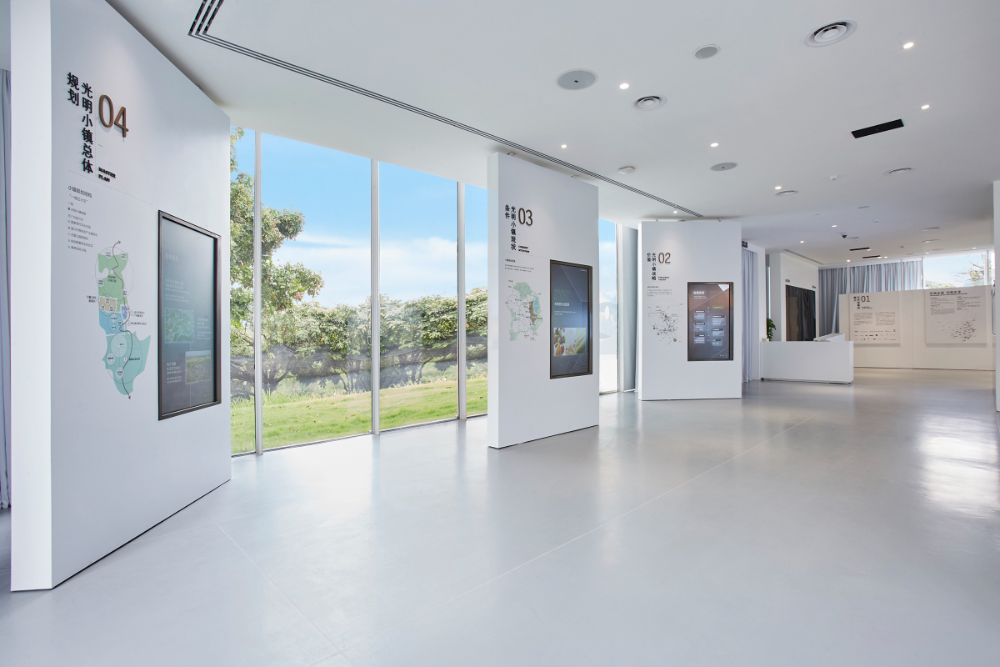
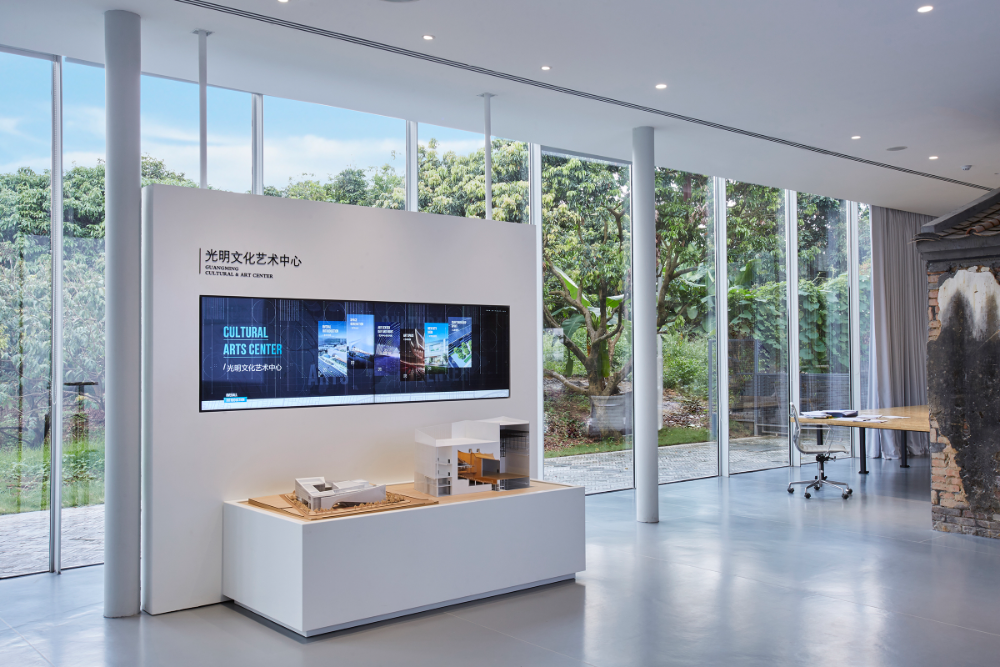
设计从当地居民生活,周边街道、院落、景观入手,在建筑与周围环境之间寻找最恰当的平衡点。优化重建又不打扰居民生活,建造升级又不破坏原生态面貌。从另一个角度来说,正契合了这届深港城市/建筑双年展“城市共生,cities grow in difference”的主题,让多种建筑形态共存,实现城市多样化和差异化生长。
Starting from the local residents' daily lives, surrounding streets, courtyards, and landscapes, the design seeks the most appropriate balance point between architecture and the surrounding environment. Optimize reconstruction without disturbing residents' lives, and upgrade construction without damaging the original ecological appearance. From another perspective, it perfectly aligns with the theme of "City Growth in Difference" at this year's Shenzhen Hong Kong City/Architecture Biennale, allowing multiple architectural forms to coexist and achieve diversified and differentiated urban growth.
项目信息--
设计公司:立方设计
地址:中国深圳
类型:建筑
材料 :砖石
分类:展览空间 文化建筑